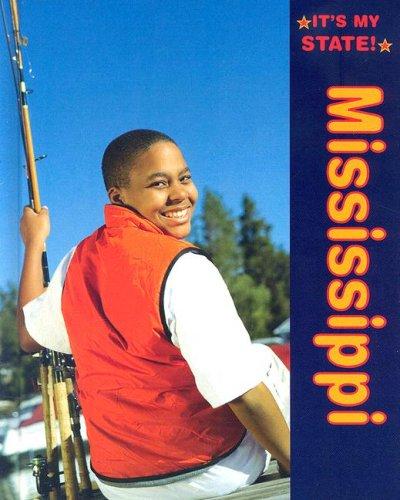
Reach for this book when your child starts asking questions about their town or neighborhood, or if your family is navigating a move to a new place. "It's My State" is a nonfiction book designed to introduce young readers to the unique geography, history, and culture of their home state. It taps into a child's natural curiosity and helps build a stronger sense of identity and belonging by connecting them to the world right outside their door. For ages 6 to 9, this book is an excellent tool for making abstract concepts like civics and history feel personal and exciting, and for starting conversations about what makes a place feel like home.
Your experience helps other parents find the right book.
Sign in to write a reviewDepending on the specific state, the book may touch on sensitive historical events like the displacement of Indigenous peoples, the Civil War, or the Civil Rights Movement. The approach is secular and informational, but due to the 2002 publication date and target age, these topics are likely simplified. The resolution is historical fact, not a narrative arc. Parental context may be needed to address the complexities.
An ideal reader is a 7-year-old who has recently moved and feels out of place, or a curious 8-year-old doing a school project on their state. It's for the child who is beginning to grasp the concept of a world beyond their own street and is looking for a way to anchor themselves within it.
Parents should preview the history sections to see how complex topics are handled. The 2002 publication date might mean some information or perspectives are dated. The book can be read cold, but it is most effective when a parent reads along, ready to provide deeper context and answer questions. A parent might seek this book after their child asks, "Where do we live exactly?" or "Why is our state famous?" It's also a perfect resource when a child comes home with a school assignment about their state or expresses feelings of loneliness after a family move.
A 6-year-old will gravitate towards the pictures, fun facts, and state symbols. They will enjoy it as a sort of local treasure hunt. An 8 or 9-year-old will engage more with the historical timeline, maps, and concepts of government and industry, potentially using it as a reference for schoolwork. Older children will grasp the cause and effect of historical events more deeply.
Unlike a general atlas, this book's power lies in its specificity. By focusing intensely on one state, it makes large, abstract concepts of geography, history, and civics feel personal, immediate, and relevant to the child's own life. It forges a direct link between the reader and their community's story.
This is a nonfiction survey book, likely part of a series, focused on a single U.S. state. Content typically covers state symbols (bird, flower, flag), key historical events, a simplified timeline, biographies of famous residents, geographical features, major cities, and local industries. The information is presented through accessible text, photographs, maps, and illustrations geared toward an early elementary audience.
This overview was generated by AI based on the book's content and reviews, and may not capture every nuance.