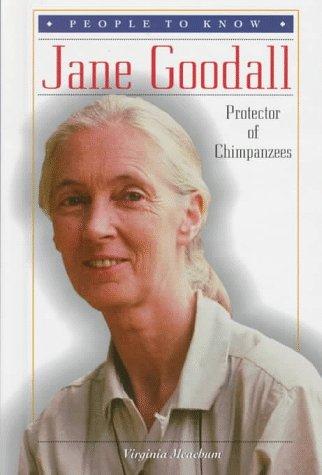
A parent might reach for this book when their child shows a deep fascination with animals and a budding sense of justice for the natural world. This biography introduces Jane Goodall, a woman who followed her childhood dream of living in Africa. It chronicles her journey from a curious girl in England to a pioneering scientist in Tanzania, where her patient observation of chimpanzees changed science forever. The book highlights themes of perseverance, curiosity, and deep empathy for animals. Accessible for independent readers aged 8-12, it's an inspiring choice to show a child how passion, observation, and kindness can truly make a difference in the world.
The book touches on the threats to chimpanzees, including habitat loss and poaching (mention of snares). This is handled directly but not graphically. It's presented as a problem that Jane, and by extension the reader, can help solve, offering a hopeful, action-oriented resolution. The approach is secular and scientific.
Ideal Reader
An 8-11 year old who loves animals and nature documentaries. This child is drawn to stories of real people who followed their dreams, especially girls interested in science and adventure. Also a great fit for a child who feels a bit different or has a unique passion that others may not understand.
Parent Prep
No significant prep is needed; the book is straightforward and self-contained. Parents might want to look up the Jane Goodall Institute online to show their child photos or videos to supplement the reading. The brief mention of poaching is not graphic but might warrant a gentle conversation about conservation. A parent notices their child spending hours watching nature shows, drawing animals, or asking deep questions about the environment. The child might have said, "I wish I could talk to animals," or "I want to be an explorer when I grow up."
Age Experience
A younger reader (8-9) will focus on the adventure: living in a tent and watching chimpanzees. An older reader (10-12) will better grasp the context: the challenges she faced as a woman without a traditional science degree, the significance of her scientific discoveries, and the complexities of conservation work.
What Makes It Special
Compared to other Jane Goodall biographies for this age, this Capstone book is highly accessible, with a strong focus on visuals (photos, maps, sidebars) and a clear, linear narrative. It excels at being an engaging introductory biography that is informative without being overwhelming, making it a perfect nonfiction entry point for young readers.
Read plot summary
This biography follows the life of Jane Goodall from her childhood in England, where she dreamed of Africa, to her groundbreaking research on wild chimpanzees in Gombe Stream National Park, Tanzania. The book details her patient methods, her key discoveries (like chimpanzee tool use and complex social structures), and her later transition to a global advocate for conservation and animal welfare. The narrative is straightforward and chronological, supported by photographs and informational sidebars.
This overview was generated by AI based on the book's content and reviews, and may not capture every nuance.
Discussion Prompts
1
Jane wasn't a trained scientist when she first went to Africa. What qualities, like patience and curiosity, helped her succeed? Can you think of a time you used patience to figure something out?
2
Jane gave the chimpanzees names like David Greybeard and Fifi instead of numbers. Why was this important, and how did it change how people thought about animals?
3
The scientific community at the time didn't believe chimpanzees used tools until Jane proved it. Why do you think it can be hard for people to accept a new idea that changes what they thought they knew?
4
After years of research, Jane decided to spend her time traveling and teaching people about conservation. Why do you think she made that change?