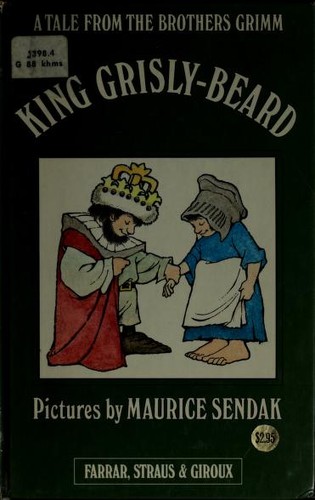
For children learning about humility and the consequences of pride, this tale shows a spoiled princess humbled by unexpected circumstances and true love.
A parent might reach for this book when their child is struggling with arrogance or has been unkind, refusing to see another person's perspective. This classic Grimm's fairy tale tells the story of a beautiful but haughty princess who cruelly mocks every suitor. Her father, furious with her pride, punishes her by marrying her to the first beggar who comes to the castle. Forced into a life of poverty and hard labor, the princess undergoes a profound transformation, learning humility, resilience, and the meaning of love. For children ages 6 to 9, this story is a powerful, if stark, cautionary tale. It provides a dramatic framework for discussing how our actions affect others and the importance of kindness over superficial judgment, making it a memorable tool for character education.
The protagonist is forced into poverty and experiences shame and hardship as a form of punishment.
Sensitive Topics
The story's premise involves emotional cruelty and control. A father forces his daughter into a marriage as a punishment, and her husband uses elaborate deception and public humiliation to change her character. While metaphorical for learning humility, the methods are presented directly and are not healthy relationship models. The resolution is hopeful, but the path to it is fraught with coercion. The story is secular.
Ideal Reader
This book is for an older elementary child (7-9) who is exhibiting signs of entitlement or being unkind to peers. It is particularly suited for a child who equates self-worth with appearance or material possessions and needs a strong, memorable narrative about the value of inner character.
Parent Prep
Parents must preview this story. It requires significant framing and discussion. Be prepared to talk about why the father's and King Grisly-Beard's actions (forced marriage, deception) are not acceptable ways to treat people, even if the goal was to teach a lesson. Contextualize it as an old fairy tale with a moral, not a literal guide to behavior. A parent has just witnessed their child mock another child for their clothes, appearance, or perceived social status. The child may be acting superior, refusing to help with chores, or expressing a lack of gratitude for what they have.
Age Experience
A 6-year-old will likely focus on the surface plot: the mean princess gets her comeuppance and then there's a surprise twist. An 8 or 9-year-old can better grasp the abstract themes of pride and humility. They are also more likely to question the fairness of the punishments and deceptions, leading to a richer moral discussion.
What Makes It Special
Compared to gentler stories about being kind, this tale is severe. The consequences for pride are not a mild lesson but a complete and dramatic destruction of the princess's world. This stark cause-and-effect structure makes the moral unforgettable, serving as a powerful, old-world allegory about character transformation.
Read plot summary
A beautiful but proud princess publicly scorns all her royal suitors, giving one the nickname "King Grisly-Beard." As punishment for her arrogance, her father marries her off to a traveling minstrel, a beggar. She is taken to a small hut and forced to perform menial tasks like cooking, cleaning, and weaving, all of which she is terrible at. Humbled by poverty and hard work, she eventually takes a job as a kitchen maid in a nearby palace. During a royal celebration, she is revealed to be the wife of the visiting king: King Grisly-Beard himself, who orchestrated the entire ordeal to teach her humility. Having learned her lesson, she tearfully reconciles with him, and they rule his kingdom together.
This overview was generated by AI based on the book's content and reviews, and may not capture every nuance.
Discussion Prompts
1
The princess's father forced her to marry the beggar as a punishment. Do you think this punishment was fair? What might have been a better way for him to teach her about kindness?
2
King Grisly-Beard pretended to be someone he wasn't to teach the princess a lesson. Was this the right way to help her? Why or why not?
3
How did the princess's feelings about herself change from the beginning of the story, when she was in the castle, to the end, when she learned the truth?
4
When the princess broke the pottery in the market, she felt truly ashamed. Why do you think this was an important moment for her character?