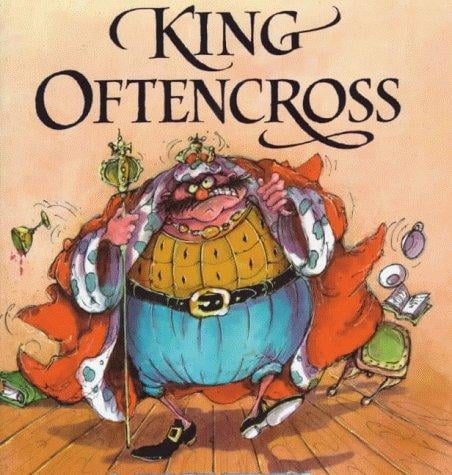
King Oftencross by Pat Posner is a charming and insightful early chapter book that tackles the challenging topic of anger and its social consequences. The story centers on a monarch, King Oftencross, whose defining characteristic is his extreme intolerance for noise. His reaction to any sound, from a sneeze to a giggle, is an exaggerated physical transformation—he swells up, turns purple, and banishes the offending subject to the dungeon. This repetitive pattern, while humorous in its absurdity, quickly leads to a poignant outcome: an entirely empty and silent kingdom.
The book handles the sensitive topic of anger by personifying it in an over-the-top, almost cartoonish way, making it accessible and non-threatening for young readers. It's not about a child's tantrum directly, but rather a metaphorical exploration of how unchecked anger can isolate us. The emotional arc moves from initial frustration and comedic exaggeration to a stark sense of loneliness, implicitly leading to a realization and potential for change.
This book is particularly well-suited for children aged 4-8 who might be struggling with managing their own big feelings, especially anger or intolerance towards others. It's also excellent for children who need to understand the impact of their actions on a community. A parent might reach for this book when their child is having frequent outbursts, struggling to share, or exhibiting a lack of empathy towards siblings or peers.
Parents should be prepared to discuss the king's feelings and the feelings of his banished subjects. The exaggerated nature of the king's anger can be a good starting point for talking about what happens when we let our anger control us. Younger children will likely find the king's purple face and swelling amusing, while older children can grasp the deeper lesson about loneliness and community. What sets this book apart is its simple, fable-like structure, which clearly illustrates cause and effect without being preachy, offering a gentle mirror for children to reflect on their own behaviors and the value of tolerance and kindness.