PLOT SUMMARY:
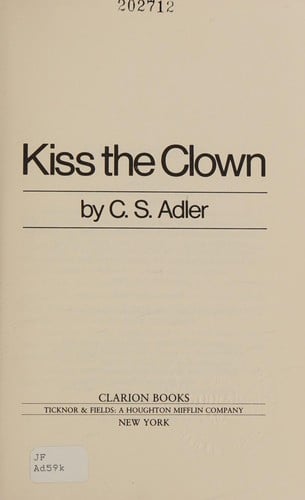
Fifteen-year-old Viki is dating popular, handsome Marc, but feels more like an accessory than a girlfriend. She is also struggling with her emotionally distant parents. Viki finds herself drawn to Marc's younger brother, Joel, who is sensitive and artistic but struggles with severe dyslexia and a fear of rejection. To build confidence, Joel secretly performs as a non-verbal clown. Viki becomes his confidante, and through their friendship, she begins to recognize the difference between Marc's superficial affection and Joel's genuine empathy, leading her to re-evaluate what she wants in a relationship and in her own life.
SENSITIVE TOPICS:
The book deals directly with the learning disability dyslexia. The approach is secular and focuses on the emotional and social impact: Joel's feelings of inadequacy, his fear of being seen as stupid, and his use of clowning as a mask and a way to express himself without words. The resolution is hopeful and realistic; Joel gains confidence and acceptance, but his dyslexia remains a part of him. The book also portrays emotional neglect from parents in a direct way, showing Viki’s loneliness as a result. This conflict is not fully resolved, but Viki learns to find emotional support elsewhere, a realistic outcome.
EMOTIONAL ARC:
The emotional arc is one of quiet, steady growth. It begins with Viki’s simmering dissatisfaction and loneliness, moves through a period of confusion as she navigates her feelings for two very different brothers, and ends with a hopeful sense of clarity and self-awareness. The tone is gentle and introspective rather than dramatic, focusing on small moments of emotional realization.
IDEAL READER:
This book is perfect for a thoughtful 11 to 13-year-old who is beginning to question social hierarchies and the nature of popularity. It will resonate with a child who feels misunderstood or is developing empathy for peers who are perceived as different. It’s an especially good fit for a reader navigating their first romantic feelings or a child who has a friend or sibling with a learning disability.
PARENT TRIGGER:
A parent might seek this book after hearing their child express frustration with a one-sided friendship or relationship, saying something like, "He never listens to me," or "I feel like she doesn't even see the real me." Another trigger could be a child expressing confusion or wanting to help a friend who is struggling with a challenge like a learning disability.
PARENT PREP:
This book can be read cold as it handles its themes gently. A parent might want to be prepared to discuss the concept of emotional availability, contrasting Marc's self-centeredness with Joel's empathy. It could also be a good entry point for a conversation about learning differences, emphasizing that everyone has unique strengths and challenges.
AGE EXPERIENCE:
A younger reader (10-11) will likely focus on the romance plot: the choice between the handsome, popular boy and the kind, misunderstood one. An older reader (12-14) will be better equipped to appreciate the subtler themes, such as the impact of Viki's home life on her choices and the psychological depth of Joel's character as he copes with his dyslexia.
DIFFERENTIATOR:
What makes this book unique, especially for its time, is its compassionate and central portrayal of dyslexia. It is not just a plot device but the core of Joel’s character arc. The story prioritizes emotional intimacy and understanding over the more dramatic or physical aspects of teen romance, offering a quiet, character-driven alternative to more contemporary YA fiction.