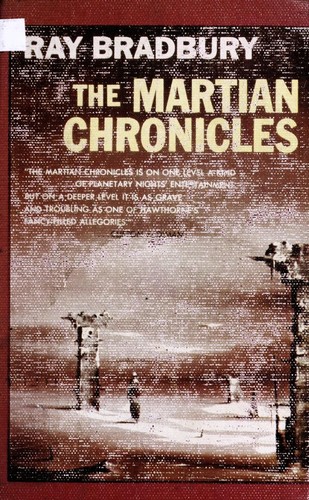
A parent might reach for this book when their teenager is starting to ponder deep questions about human nature, the ethics of colonization, or the bittersweet feeling of things changing forever. It is an ideal bridge for the reader who feels like an outsider or is struggling to reconcile their own values with the actions of the world around them. While the setting is a fantastical Mars, the stories are deeply rooted in the human experience of loneliness, nostalgia, and the search for belonging. Bradbury uses science fiction as a mirror to examine how we treat those who are different and how we carry our ghosts with us to new places. For the 12 to 18 age group, it offers a sophisticated look at social issues and personal integrity. Parents will appreciate the lyrical, evocative prose that elevates the genre into high literature, making it a perfect choice for fostering critical thinking and empathy during the transition into adulthood.
Your experience helps other parents find the right book.
Sign in to write a reviewDirect allegories for American segregation and historical displacement of indigenous peoples.
Pervasive sense of loneliness, nostalgia, and the loss of one's home planet.
Some psychological suspense and eerie moments involving Martian illusions.
Characters often make difficult or questionable choices regarding the Martian environment.
The book deals with death and the extinction of a civilization (the Martians) through a metaphorical lens, often mirroring historical colonialism. It addresses nuclear war and environmental destruction realistically in terms of consequence but through a sci-fi setting. The tone is secular but deeply philosophical, ending on a note that is both melancholy and cautiously hopeful.
A thoughtful 14-year-old who feels a bit like an old soul, enjoys philosophy, and is starting to notice the complexities and flaws in adult society.
Parents should be aware of the story 'Way in the Middle of the Air,' which deals with Jim Crow era racism; it requires historical context. Also, the story 'Usher II' is a dark homage to Poe and might be intense for younger readers. A parent might see their child becoming cynical about the news or the state of the world, or perhaps the child is expressing a profound sense of isolation from their peers.
Younger teens will focus on the cool gadgets and the alien mysteries of Mars. Older teens will grasp the heavy allegories concerning racism, censorship, and the Cold War.
Unlike hard sci-fi that focuses on technology, Bradbury focuses on the human heart and the lyrical beauty of his prose, making it feel more like a dark fairy tale than a technical manual.
This episodic novel chronicles the human colonization of Mars from 1999 to 2026. It begins with the initial expeditions and the tragic interactions with the telepathic Martian civilization. As more humans arrive, they bring Earth's problems with them: consumerism, environmental neglect, and eventually, the shadows of a nuclear war back home. The book concludes with the few remaining survivors on Mars attempting to preserve the best of humanity while letting go of its destructive past.
This overview was generated by AI based on the book's content and reviews, and may not capture every nuance.