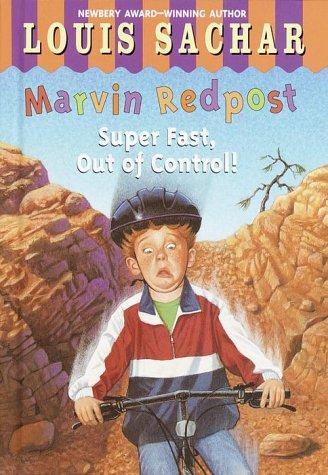
Marvin Redpost, a third-grader, receives a new mountain bike but is secretly terrified of riding it. His friends and family, however, have built up the expectation that he will ride it down the local, intimidating "Suicide Hill." The story follows Marvin's escalating anxiety and his internal struggle to either live up to expectations or admit his fear. The book handles fear and peer pressure directly but with a light, humorous touch characteristic of Louis Sachar. Marvin's fear is palpable and relatable, but the narrative never becomes overly intense or scary. The "Suicide Hill" name, while dramatic, is presented as a childhood legend rather than a truly dangerous threat, allowing for exploration of courage without excessive peril. The focus is on Marvin's internal emotional journey. The emotional arc starts with Marvin's growing anxiety and internal conflict, building suspense around the impending bike ride. It moves through moments of self-doubt and potential embarrassment, ultimately culminating in a hopeful and empowering resolution where Marvin learns about his own bravery and integrity. The overall tone is uplifting. This book is ideal for early elementary children (ages 6-9) who are beginning to navigate social dynamics, peer pressure, and the challenge of confronting their own fears. It's particularly resonant for kids who might feel inadequate or worry about what others think of them. A parent might reach for this book when their child is experiencing anxiety about a new challenge, struggling with peer pressure, or needs a gentle reminder about the importance of self-belief and honesty. It's also a great choice for a child who enjoys humorous, character-driven stories. Parents should be aware of the name "Suicide Hill," which might warrant a brief discussion about hyperbole in children's language or the difference between real danger and perceived fear. Otherwise, the book is straightforward and doesn't require much pre-reading. Younger readers (6-7) will connect with Marvin's immediate fear and the excitement of the bike challenge. Older readers (8-9) will appreciate the nuances of peer pressure, Marvin's internal monologue, and the deeper themes of self-confidence and integrity. The humor is accessible across the age range. Louis Sachar's distinctive voice, known for its quirky humor and insightful portrayal of childhood dilemmas, sets this series apart. Unlike some books that might offer a simplistic "just be brave" message, Sachar delves into the process of confronting fear and the internal struggle, making Marvin's journey feel authentic and empowering. The relatable school setting and the focus on a common childhood object (a new bike) also make it highly engaging.