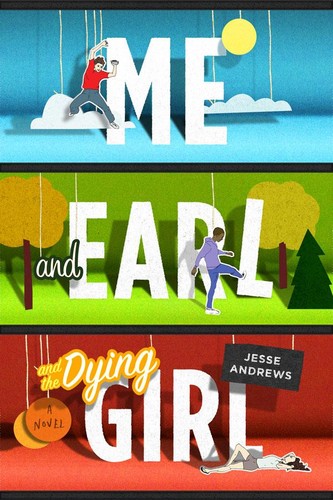
For teens navigating complex friendships and confronting serious illness, this book explores finding connection, humor, and self-discovery in difficult circumstances.
A parent might reach for this book for a teen who uses cynical humor to hide their feelings or struggles with forming genuine friendships. It is especially relevant when that teen is confronted with a difficult reality, like a friend's serious illness. The story follows Greg, a high school senior who avoids social commitment until his mom forces him to spend time with Rachel, a girl from his past who has leukemia. This is not a sentimental romance. It's a raw, funny, and brutally honest look at the awkwardness of being a teenager facing mortality. For older teens (14+), it deals with grief, identity, and the messiness of real connection, using dark humor and profanity that will resonate with readers who are tired of sanitized stories.
Frequent, strong profanity and crude language are part of the narrator's voice.
Substance ReferencesModerate
Teenage characters smoke cigarettes and reference marijuana use.
Romantic ContentMild
Crude sexual humor and discussions of attraction, but no explicit scenes.
Sensitive Topics
The book's central topic is terminal illness (leukemia) and the death of a young person. The approach is relentlessly direct and secular. It actively subverts the tropes of inspirational cancer stories. The book focuses on the messy, awkward, and often selfish reality of being a teenager faced with a friend's mortality. The resolution is realistic and heartbreaking, not hopeful in a traditional sense. Rachel dies, and Greg is left to grapple with his grief and his own shortcomings. The ending offers a fragile sense of growth, not a neat, uplifting conclusion.
Ideal Reader
A cynical, media-savvy older teen (15-18) who appreciates dark, irreverent humor and is skeptical of sentimentality. This book is for the reader who feels like an outsider, uses humor as a defense mechanism, and is grappling with social anxiety or the pressure to feel or act a certain way in the face of tragedy.
Parent Prep
Parents should be prepared for the pervasive, strong language (frequent F-bombs), crude sexual humor, and an intentionally unlikable, self-absorbed narrator. This book is an antidote to the sweet, romanticized sick-lit genre. Its value lies in its brutal honesty, which can be jarring. The book can be read cold, but parents should know it does not offer easy comfort or an inspirational message. The ending is sad and unresolved. A parent notices their teen reacting to serious news (like a classmate's illness) with inappropriate jokes, awkwardness, or total withdrawal. The trigger could be observing their teen keeping all their peer relationships superficial, or hearing them express a deeply cynical worldview that seems to mask a fear of emotional vulnerability.
Age Experience
A younger teen (14-15) might latch onto the humor, the high school social commentary, and the filmmaking subplot. They will experience the story as a funny but very sad book about a friend dying. An older teen (16-18) is more likely to appreciate the meta-narrative, the critique of storytelling tropes, and the complex psychological portrait of Greg's profound fear of intimacy. They will see it as a book about the painful necessity of genuine human connection.
What Makes It Special
What makes this book unique is its aggressive, self-aware deconstruction of the 'Manic Pixie Dream Girl' and 'dying girl' tropes. It is not a love story. Its narrator is not a hero who is ennobled by the experience. By using an unlikable protagonist and crude, laugh-out-loud humor, it presents a far more authentic and uncomfortable portrait of teenage grief and selfishness than almost any other book in the genre.
Read plot summary
Seventeen-year-old Greg Gaines is a social chameleon, maintaining a low level of acquaintance with every clique at his Pittsburgh high school to avoid intimacy and conflict. His carefully constructed, detached world is shattered when his mother forces him to reconnect with Rachel, a girl he barely remembers from Hebrew school who has just been diagnosed with leukemia. Greg, along with his best and only friend Earl, whom he calls his “co-worker,” are amateur filmmakers specializing in terrible parodies of classic films. At a classmate’s suggestion, they decide to make a film for Rachel, a project that forces Greg to confront his own emotional cowardice as Rachel’s illness progresses.
This overview was generated by AI based on the book's content and reviews, and may not capture every nuance.
Discussion Prompts
1
Greg insists Earl is his 'co-worker,' not his friend. Why do you think he refuses to use the word 'friend' for Earl and, initially, for Rachel? What does this say about his fear of connection?
2
The book actively makes fun of stories where a sick person teaches a healthy person how to live. Do you think Greg learns anything from Rachel? If so, what is it, and is it the kind of lesson the book makes fun of?
3
At the end of the book, Greg admits that he has no idea what to do with his life and that he destroyed all his movies. Why do you think he did that? Is this a moment of failure or a step toward growth?
4
The humor in this book is often very dark and crude. How did the humor affect your experience of reading about a serious topic like cancer? Did it make it easier or harder to connect with the story?