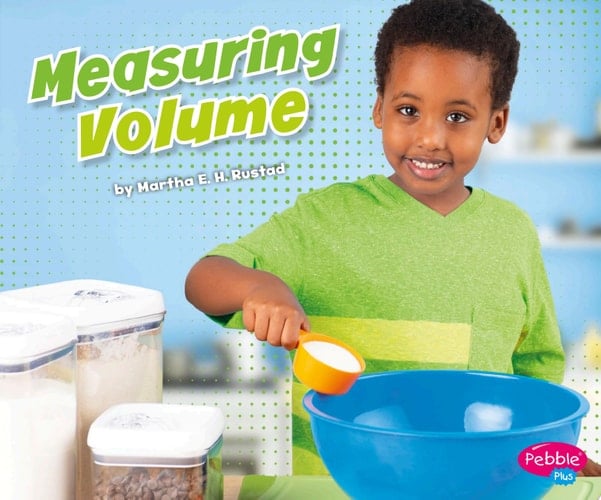
About This Book
Will it hold more or less? Use a measuring tool to measure the volume. From teaspoons to gallons, learn about volume and become a measuring master.
Wonderlit Review
Martha E. H. Rustad's 'Measuring Volume' offers a straightforward and engaging introduction to a key STEM concept for young readers. The book clearly explains what volume is and demonstrates how to measure it using common tools like spoons and gallons. It handles the topic directly, with a focus on practical application rather than metaphorical or abstract ideas. The emotional arc is one of gentle discovery and empowerment, as children learn a new skill. This book is specifically for children in early elementary grades who are beginning to grasp quantitative concepts, or for preschoolers with a budding interest in how things work. A parent would reach for this when their child shows curiosity about cooking, pouring, or comparing quantities, or as a supplement to early math and science lessons. Parents should preview the simple vocabulary and concepts, ensuring their child is ready for basic measurement terms. Younger children (4-6) will benefit from it as a read-aloud, focusing on the illustrations and basic comparisons, while older children (7-11) can read it independently and grasp the more specific measurement units. Its strength lies in its clear, concise approach, making it a solid foundational text compared to more complex science books.
If Your Family Enjoyed This

Reviews
No reviews yet. Be the first to share how this book landed with your family.