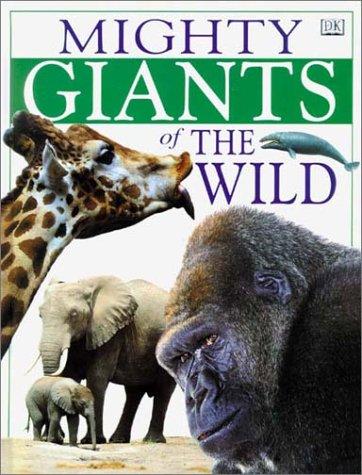
A parent should reach for this book when their child is captivated by superlatives like 'biggest' and 'strongest' and is ready for more facts than a simple storybook provides. Mighty Giants of the Wild introduces early elementary readers to the largest creatures on Earth, from the blue whale to the African elephant, in an accessible and engaging format. The book's primary emotional draw is its ability to inspire curiosity and a profound sense of wonder about the natural world. By showcasing these incredible animals, it also subtly nurtures empathy and respect for wildlife. Ideal for ages 6-9, this is a perfect 'gateway' nonfiction book that uses a high-interest topic to build scientific vocabulary and a love for learning.
The book touches on natural predator and prey dynamics, but it is handled in a direct, scientific, and non-graphic manner appropriate for the age group. The approach is entirely secular.
This book is for the 6- to 8-year-old fact-hound who is obsessed with records and superlatives. They love to learn and recite amazing facts about animals, dinosaurs, or vehicles. This child is likely transitioning from picture books to early nonfiction and is drawn to clear, impressive information that feels powerful to know and share.
Your experience helps other parents find the right book.
Sign in to write a reviewNo specific preparation is needed; this book can be read cold. The content is self-contained and age-appropriate. Parents should be prepared for it to spark many follow-up questions, so having a device ready for further Googling might be helpful. The 1996 publication date is worth noting, but the core biological facts about the animals remain sound. The parent has heard their child repeatedly ask, "What's the biggest animal in the world?" or has seen them gravitate toward books and shows about dinosaurs or monsters. The parent is looking for a book to channel that fascination with size and power into real-world science and reading.
A 6-year-old will likely enjoy this as a read-aloud, focusing on the impressive illustrations and the 'wow' factor of the size comparisons. They will absorb new vocabulary. An 8- or 9-year-old can read it independently, better retaining specific statistics, comparing the different animals, and using the information as a foundation for school projects or further research.
Unlike many modern, visually dense nonfiction books, this book's potential 1990s design offers a simpler, less cluttered layout. Its brevity (21 pages) makes it far less intimidating than a comprehensive encyclopedia, positioning it perfectly as a focused, exciting introduction that builds confidence in young nonfiction readers.
This is a straightforward, informational book introducing young readers to a selection of the world's largest animals. Each brief chapter or two-page spread focuses on a specific 'giant,' such as the blue whale, grizzly bear, African elephant, and giant squid. The text provides key, digestible facts about each animal's size, habitat, diet, and unique characteristics, supported by illustrations. It is not a narrative but a high-interest, fact-based survey of megafauna.
This overview was generated by AI based on the book's content and reviews, and may not capture every nuance.
