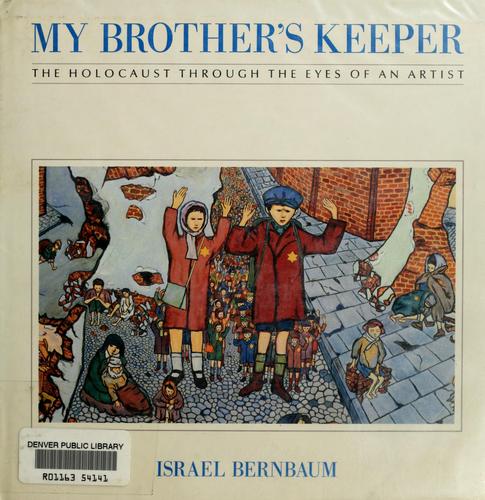
For families seeking to understand the enduring power of love and courage, this book portrays one family's strength during the WWII Łódź ghetto terror and separation in Auschwitz.
A parent might reach for this book when their child is ready for a personal, truthful introduction to the Holocaust that centers family love amidst unimaginable hardship. "My Brother's Keeper" is the true story of Ben Edelbaum and his family, recounted from his childhood perspective during their confinement in the Łódź ghetto in Poland during World War II. The narrative focuses on the small, brave acts of love and sacrifice that kept the family's spirit alive until their eventual deportation and separation at Auschwitz. It's a powerful and somber book, best suited for mature readers aged 10 and up who can be guided through its difficult themes of fear, loss, and resilience by a trusted adult.
Depicts the historical, systematic persecution and murder of Jewish people during the Holocaust.
Scary ScenesIntense
Scenes include Nazi roundups, constant fear of death, and the terrifying arrival at Auschwitz.
ViolenceModerate
Violence is described and implied (forced labor, persecution) but not graphically detailed.
Sensitive Topics
The book deals directly with the Holocaust. Themes of persecution, antisemitism, starvation, intense fear, and the death of loved ones are central. The approach is unflinchingly direct, based on the author's own memories. The resolution is realistic and tragic: the family is separated, and their fate is left to the reader's historical understanding. The context is specifically the Jewish experience, and the tone is one of solemn remembrance, not of a hopeful outcome but of the endurance of love.
Ideal Reader
A mature 10 to 14 year old who is studying the Holocaust and is prepared for a personal, nonfictional account. This book is for a child who asks serious questions about history and injustice and can handle a story without a happy resolution. It serves as a powerful humanizing element to historical study.
Parent Prep
This book requires significant parent preparation and involvement. A parent must read it first. The entire book is emotionally taxing, particularly the final pages depicting the arrival at Auschwitz. It cannot be read cold. Parents must be ready to discuss the historical facts of the Holocaust, concentration camps, and antisemitism to provide necessary context and support. A parent has seen their child learning about WWII or the Holocaust in school and the child is asking pointed questions: "What was it like for kids?" or "Did families get separated?" The parent wants a resource that is honest but focuses on the strength of human bonds.
Age Experience
A 10 or 11 year old will likely focus on the emotional story of the family, the fear, and the profound sadness of the separation. They will need help understanding the larger historical context. A 13 or 14 year old is more likely to grasp the systemic nature of the genocide, the political context, and connect the story's themes of prejudice and resilience to broader social issues.
What Makes It Special
Its unique power lies in the combination of the spare, first-person text and the author's own haunting, expressive paintings. The art functions as an emotional commentary rather than a literal illustration, giving the book a dual layer of memory and reflection. This makes the experience deeply personal and visually unforgettable, distinct from photographic or purely text-based accounts.
Read plot summary
Narrated by Ben Edelbaum, the book recounts his family's life in Poland before the Nazi invasion, their forced relocation to the Łódź ghetto, and the daily struggles for survival. The story emphasizes the family's deep commitment to protecting one another, their Jewish faith, and their humanity in the face of starvation and terror. The memoir culminates with the family's deportation to Auschwitz and their ultimate separation, a heartbreaking and abrupt conclusion to their time together. The story is accompanied by the author's own evocative and powerful paintings.
This overview was generated by AI based on the book's content and reviews, and may not capture every nuance.
Discussion Prompts
1
Ben's father often says, 'We must be our brother's keeper.' What specific actions does the family take to live up to this idea in the ghetto?
2
The author, Israel Bernbaum, painted the illustrations himself many years after the events. How do the paintings make you feel? Do you think they show exactly what happened, or do they show the memory and feeling of what happened?
3
The book ends very suddenly when Ben is separated from his family at Auschwitz. Why do you think the author chose to stop the story at that exact moment?
4
Ben describes his mother saving a small piece of her bread ration for him. In a place where everyone was starving, why were these small acts of sacrifice so important?
5
After reading Ben's story, what do you think is the most important lesson about courage or family that he wants to share with readers?