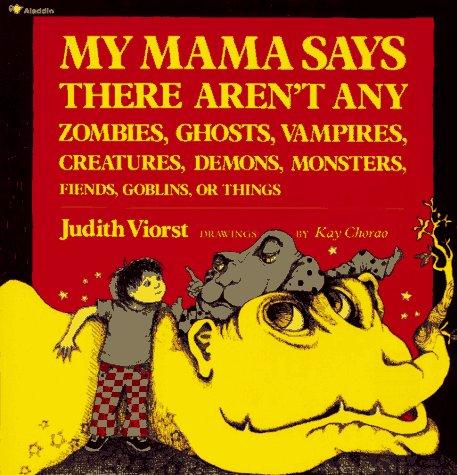
Judith Viorst's 'My Mama Says There Aren't Any Zombies, Ghosts, Vampires, Demons, Monsters, Fiends' is a timeless and comforting exploration of childhood fears, presented with Viorst's signature wit and understanding of a child's mind. The book centers on young Nick, who, like many children, is plagued by nighttime anxieties about various spooky creatures. The genius of the narrative lies in Nick's internal monologue, where he humorously recounts his mother's past 'mistakes' (like misplacing cream cheese or mispredicting a tooth's departure) to justify his doubt about her assurances regarding monsters. This relatable premise normalizes a child's questioning nature and the very real feeling of uncertainty.
The book handles sensitive topics, specifically fear and trust, with a gentle, humorous touch. It doesn't dismiss the child's fears but rather acknowledges them through Nick's detailed imaginings, then provides a loving, rational counterpoint through the mother's consistent reassurance. The emotional arc starts with mild anxiety and doubt, gradually building to a heartwarming resolution where Nick ultimately finds comfort and trust in his Mama's words. It's a journey from 'what if' to 'it's okay.'
This book is specifically for children aged 4-8 who are experiencing bedtime fears, anxieties about the dark, or who are generally questioning the world around them. It's also excellent for children who might be struggling with the concept of trust, especially when adults make minor, everyday errors. A parent would reach for this book when their child is expressing fears about monsters, shadows, or anything that goes bump in the night, or when they need a gentle reminder that their parent is a reliable source of comfort and truth. Parents should preview the book to appreciate the humor in Nick's 'mistakes' and be ready to discuss how even though adults can be wrong about small things, they are steadfast in protecting their children from real dangers. Younger children (4-6) will appreciate the rhythmic language and the comforting presence of the mother, while older children (7-8) might connect more deeply with Nick's internal logic and the humor of his 'evidence.' What makes it different from other books on fears is its unique blend of humor and the child's logical, albeit flawed, reasoning about parental reliability, making it both entertaining and deeply reassuring.