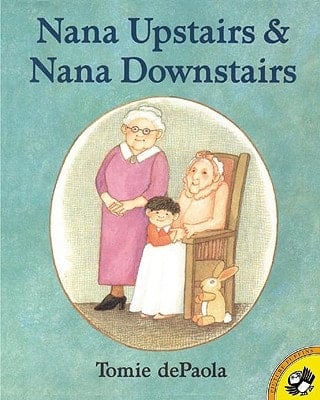
Tomie dePaola's Nana Upstairs and Nana Downstairs is a foundational text for introducing the concept of death to young children. This autobiographical story, told from the perspective of a young boy named Tommy, gently navigates the loss of his great-grandmother (Nana Upstairs) and later, his grandmother (Nana Downstairs). The narrative focuses on the loving relationships Tommy shares with both women, emphasizing the warmth and connection before addressing their passing. The book handles sensitive topics with remarkable tenderness and simplicity, avoiding euphemisms while still being age-appropriate. It presents death as a natural part of life, and more importantly, highlights the enduring power of memory and love. The emotional arc is gentle throughout, starting with joyful family interactions and moving to a poignant, yet ultimately hopeful, understanding of loss. This book is specifically for children aged 4-8 who are experiencing or beginning to ask questions about the death of a loved one, particularly a grandparent or great-grandparent. A parent would reach for this book when a family member is ill, has recently passed away, or when a child expresses curiosity or anxiety about death. Parents should be prepared to discuss the concept of death directly, as the book does not shy away from it, but frames it within a comforting narrative of remembrance. Younger children (4-6) will benefit from the read-aloud experience, focusing on the loving relationships and the idea of keeping memories. Older children (7-8) might engage more deeply with the concept of grief and the passage of time, as Tommy grows up in the story. What sets this book apart is its autobiographical nature, lending it an authentic, heartfelt quality, and dePaola's signature warm, accessible illustrations that provide visual comfort alongside the narrative.