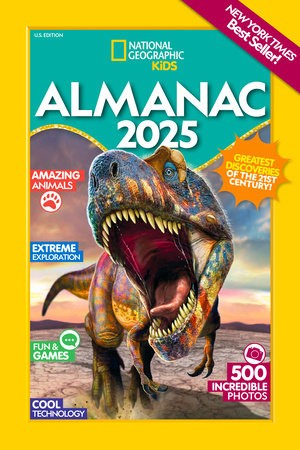
A parent should reach for this book when their endlessly curious child needs a fun, engaging, and screen-free source of entertainment and information. The National Geographic Kids Almanac is a vibrant, photo-filled compendium of facts, games, and activities covering a massive range of topics including animals, space, science, and history. It's designed to be browsed and explored, making it perfect for reluctant readers or any child who prefers bite-sized chunks of information. This book masterfully fuels a child's natural sense of wonder, building their confidence as they learn new things and inspiring a sense of joy and awe about the world around them. For ages 8 to 12, it’s an ideal travel companion or rainy-day boredom buster.
The content is overwhelmingly positive and educational. Any sensitive topics are handled in a factual, non-graphic manner. For example, sections on animals may mention predator and prey dynamics, and historical or environmental sections may allude to conflict or natural disasters, but always within a safe, scientific, and secular context. There is no emotionally distressing material.
Your experience helps other parents find the right book.
Sign in to write a reviewThe ideal reader is an 8 to 12-year-old fact-hound, the kind of child who loves trivia and sharing unbelievable information. It is also perfectly suited for a reluctant reader who is overwhelmed by dense text and prefers visual-heavy, non-fiction formats. It’s for the child who is starting to develop their own interests and wants to explore them independently.
No preparation is required. The book can be handed directly to a child. A parent might note that since it's the 2012 edition, some information regarding technology, records, or pop culture may be dated. This can serve as a fun discussion point about how much has changed in a decade. A parent might seek this book after hearing their child say, 'I'm bored,' during a school break or on a long car ride. It's also a great choice when a parent is looking to supplement school learning in a fun way or wants an alternative to screen time that is still highly engaging and entertaining.
An 8 or 9-year-old will be mesmerized by the stunning photographs and shocking animal facts, likely flipping through to find the most visually exciting pages. A 11 or 12-year-old will engage more deeply with the text, complete the more complex puzzles, and may use the book as a springboard for further research on topics that intrigue them.
Compared to other children's almanacs, National Geographic's version stands out due to its world-class photography and dynamic, magazine-style layout. It feels less like a dense reference book and more like an exciting exploration. The integration of hands-on activities, games, and a strong emphasis on nature and science gives it a unique, adventurous identity.
As an almanac, this book does not have a narrative plot. It is a non-fiction collection of high-interest articles, lists, photo essays, quizzes, and puzzles organized into thematic chapters. Topics span the natural world, science and technology, space, world geography, history, and pop culture relevant to its publication year. The format encourages browsing and 'dip-in, dip-out' reading, allowing children to explore whatever catches their eye, from animal facts to profiles of explorers.
This overview was generated by AI based on the book's content and reviews, and may not capture every nuance.