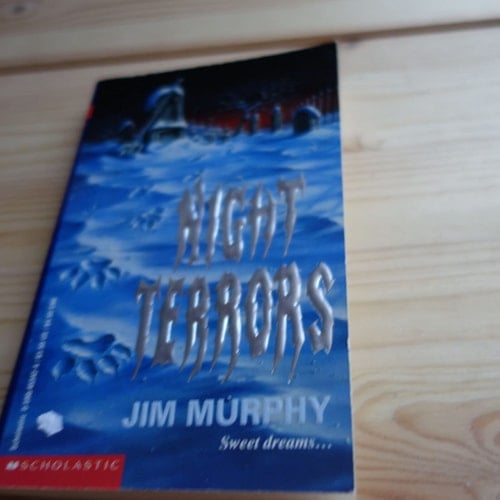
About This Book
These are the hours when our dreams betray us and night terrors take hold.
Scary Scenes
peril_danger
mental_health_themes
Wonderlit Review
Jim Murphy's "Night Terrors" is a chapter book that plunges young readers into the unsettling world of a child experiencing night terrors. While specific plot details are sparse, the title and genre classification as "horror stories" strongly suggest a narrative focused on the intense fear and panic associated with this sleep disorder. The book likely explores the protagonist's internal struggle with these terrifying nocturnal episodes, potentially personifying the fears or presenting them as vivid, dream-like sequences.
This book handles the sensitive topic of night terrors, a real sleep disorder, through a fictional and possibly metaphorical lens. For the 4-11 age range, the "horror" elements are expected to be more suspenseful and eerie rather than graphic, focusing on the emotional experience of fear. It is likely secular in its approach, centering on the child's emotional and psychological journey toward coping with their fears. The emotional arc would probably begin with the protagonist feeling overwhelmed by fear and anxiety, moving through attempts to understand or confront these terrors, and ideally concluding with a sense of empowerment or a reduction in the severity of the episodes, fostering a more hopeful outlook.
This book is specifically for children who experience frequent nightmares, night terrors, or significant nighttime fears. It also appeals to children who enjoy spooky stories that delve into themes of fear and bravery. It could be particularly beneficial for children aged 7-10 who are transitioning to chapter books and might find resonance with a character facing similar internal struggles. A parent would reach for this book if their child is grappling with sleep-related anxieties, or if they are looking for an age-appropriate spooky story that also addresses a real-life challenge.
Parents should be prepared to discuss the distinction between fictionalized horror and the reality of night terrors, reassuring children that while the book is scary, real night terrors are a sleep phenomenon that many children outgrow. Previewing the book is advisable for younger or more sensitive readers. Younger children (4-6) may find the content quite frightening and benefit from it being read aloud with parental guidance, while older children (7-11) are more likely to appreciate the suspense and themes of courage, potentially reading it independently. What sets this book apart from purely informational texts on sleep disorders is its narrative approach, allowing children to emotionally connect with a character's experience within an engaging, mildly scary story.
If Your Family Enjoyed This
Reviews
No reviews yet. Be the first to share how this book landed with your family.