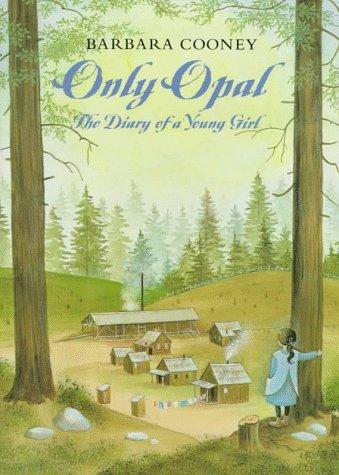
Only Opal: The Diary of a Young Girl is a tender and evocative verse novel, beautifully adapting the real-life writings of Opal Whiteley. The book chronicles a year in the life of five-year-old Opal, an orphan living with her adopted family in an Oregon lumber camp around 1900. Through lyrical poetry, readers experience Opal's world, marked by frequent moves and the simple, profound wonders she finds in nature. The narrative gently explores themes of resilience, the power of observation, and the search for belonging, all through the innocent yet insightful voice of a child.
The book handles the sensitive topic of being an orphan and living in potentially challenging circumstances with a delicate touch. While the underlying sadness of her situation is present, it is overshadowed by Opal's indomitable spirit and her deep connection to the natural world, which serves as both comfort and constant companion. The emotional arc is largely gentle and hopeful, emphasizing Opal's ability to find joy and express herself despite her transient life.
This book is particularly suited for children aged 4-11. Younger children (4-7) will appreciate it as a read-aloud, drawn in by the poetic language and the vivid descriptions of nature, while older children (8-11) can engage more deeply with the historical context, the themes of resilience, and the unique diary format. Parents might reach for this book when their child is experiencing change or transition, or when they want to introduce concepts of historical life, nature appreciation, or the simple act of journaling. It's also excellent for fostering empathy and discussion about different childhood experiences.
Parents should be prepared to discuss the concept of an adopted child and the realities of early 20th-century life, which might include less material comfort than children are used to today. The book's strength lies in its lyrical quality and its focus on Opal's inner world, making it a unique entry point into historical fiction and biographical poetry. Unlike many historical accounts, it prioritizes the emotional landscape and the child's perspective, making it deeply relatable and memorable.