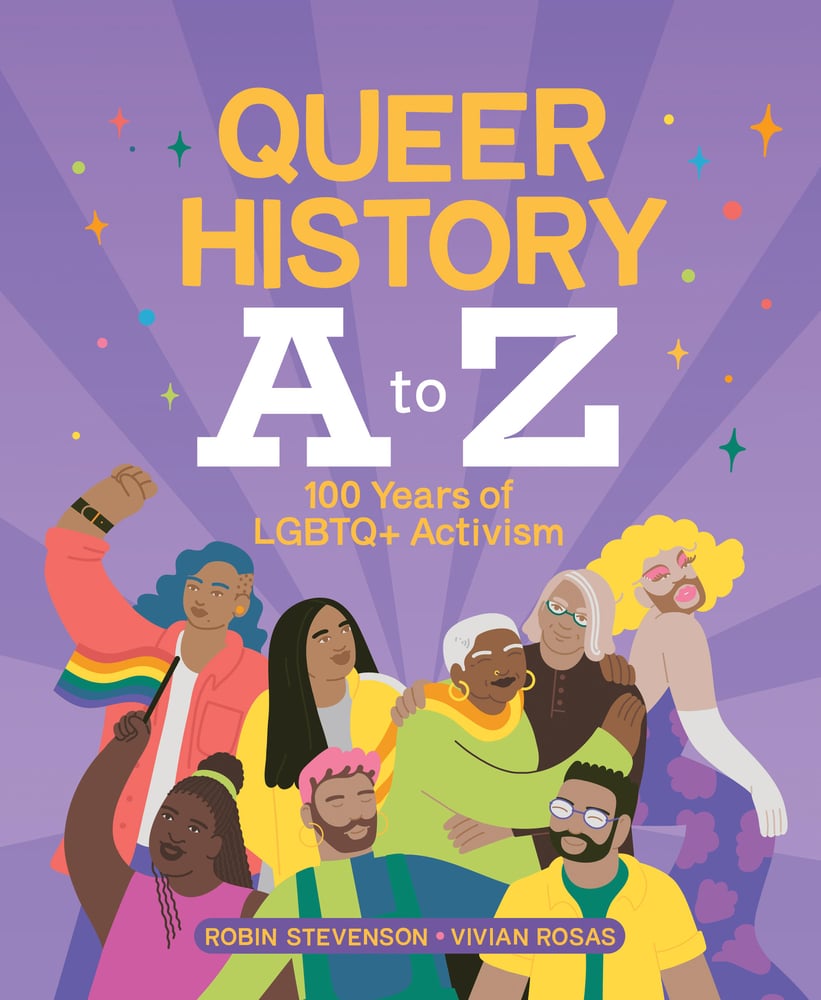
Reach for this book when your child starts asking questions about Pride flags, different types of families, or why some people have to fight for their rights. It serves as a gentle yet honest introduction to the history of the LGBTQ+ community, framed through the familiar structure of the alphabet. It transforms complex historical events and figures into accessible stories of courage and community. While the book addresses historical challenges and discrimination, its core focus is on hope, belonging, and the joy of being oneself. It is perfectly calibrated for the 6 to 10 age range, providing enough detail to satisfy curiosity without overwhelming young readers. Parents will find it an invaluable tool for fostering empathy and celebrating the diverse tapestry of human identity.
The book deals with identity and civil rights through a direct, secular lens. It acknowledges that people were once treated unfairly or had to hide who they were, but it maintains a hopeful, realistic resolution by showing the progress made through community action.
Your experience helps other parents find the right book.
Sign in to write a reviewAn elementary student who is beginning to notice social justice issues or a child from a queer family who wants to see their community's history reflected in their reading. It is also perfect for the 'fact-collector' child who loves learning about real-world heroes.
Parents may want to preview 'S for Stonewall' or 'L for Laws' to be ready for questions about why certain rules existed in the past. The book is very accessible and can be read cold, but it encourages side-bar conversations about fairness. A child asking, 'Why did people get arrested just for being themselves?' or 'Why do we have a special parade for this?'
A 6-year-old will focus on the colorful symbols and the basic idea of being a good friend to everyone. a 10-year-old will grasp the historical significance of the timeline and the nuances of how different movements intersect.
Unlike many LGBTQ+ books that focus solely on modern family structures, this provides a historical backbone. It uses the A to Z format not just for literacy, but as a filing system for a rich, global heritage.
This non-fiction concept book uses the alphabet to navigate LGBTQ+ history. Each letter introduces a person (like Harvey Milk or Marsha P. Johnson), a place (like the Stonewall Inn), or a concept (like Pride or Intersectionality). It blends historical facts with vibrant illustrations to show how activists have worked to make the world more inclusive.
This overview was generated by AI based on the book's content and reviews, and may not capture every nuance.