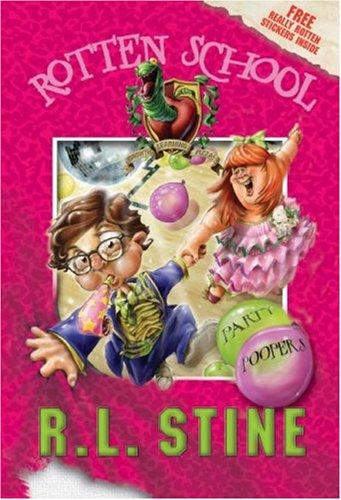
A parent might reach for this book when their child needs a pure, laugh-out-loud escape from homework and real-world pressures. This story is for the kid who loves slapstick, clever pranks, and doesn't need a heavy moral lesson with their entertainment. The book follows Bernie Bridges, a fourth-grade schemer at a chaotic boarding school, as he and his friends cook up ridiculous plans to make money or get one over on their wealthy, snobby rivals. The emotional core is light, focusing on the unbreakable bonds of friendship, teamwork, and the silly rivalries of school life. It's a fantastic choice for reluctant readers aged 8-11, offering fast-paced, low-stakes fun that will get them turning pages with a grin.
The book's primary "sensitive" area is its moral ambiguity, but it is handled in a completely secular and comedic fashion. Bernie lies, cheats, and manipulates to achieve his goals. However, this is never presented as a serious moral failing. It's cartoonish and played for laughs, with the consequences being silly rather than severe. The resolution is always hopeful and funny, reinforcing friendship over any material gain, even if Bernie doesn't learn a deep lesson.
Your experience helps other parents find the right book.
Sign in to write a reviewThe ideal reader is an 8 to 10-year-old, particularly a reluctant reader, who loves prank-based humor and school stories. This child has likely devoured series like 'Diary of a Wimpy Kid' or 'Captain Underpants' and is looking for another funny, fast-paced world to dive into. They value humor over complex plots or deep emotional arcs.

No significant prep is needed; the book can be read cold. A parent might want to be ready for a brief, light conversation about how Bernie's schemes (like lying) are funny in a book but not a good strategy for real-life problems. The context is so exaggerated that most children will understand the difference instinctively. A parent has just heard their child say, "Reading is boring," or has noticed their child is drawn to silly, slapstick TV shows and YouTube videos. This book is the perfect bridge to get that child engaged with a book that mirrors the high-energy, low-stakes humor they already enjoy.
A younger reader (8-9) will focus on the slapstick, the gross-out jokes, and the clear rivalry between Bernie and Sherman. An older reader (10-11) will better appreciate the wordplay, the cleverness of some of the schemes, and the social dynamics within Bernie's friend group. They may also begin to see the satire in the exaggerated character types.
Unlike many school stories that focus on the anxieties of daily life, 'Rotten School' uses its boarding school setting to create a self-contained world where kids have more freedom for large-scale pranks. Its focus is less on internal monologue (like 'Wimpy Kid') and more on external, action-oriented scheming. It showcases R. L. Stine's talent for comedic pacing, a contrast to his well-known horror work.
This first book in the series introduces fourth-grader Bernie Bridges and his life at Rotten School, a zany boarding school. The main plot revolves around the annual "Goodest Kid Contest." The winner gets a cash prize and a trip to a water park. Bernie, motivated by the prize, decides to enter. Instead of actually being good, he and his loyal dorm-mates (Belzer, Feenman, and Crench) devise a series of elaborate, slimy, and hilarious schemes to make his rich rival, Sherman Oaks, look bad and himself look heroic. The plots backfire in comedic ways, leading to slapstick chaos involving everything from fake fainting spells to giant blobs of goo.
This overview was generated by AI based on the book's content and reviews, and may not capture every nuance.