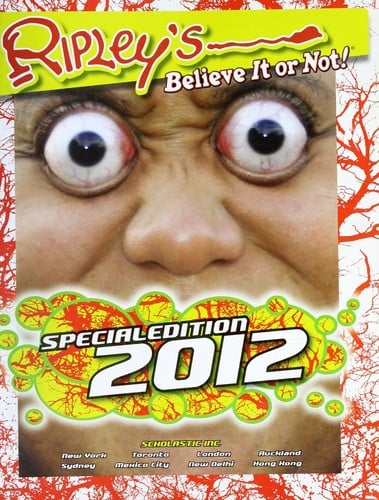
About This Book
Ripley's Believe It or Not Special Edition 2012 is a captivating nonfiction book that compiles hundreds of strange, unusual, and often unbelievable facts, photographs, and stories from around the world. Based on the iconic franchise, this annual edition is designed to spark curiosity and wonder in young readers aged 4-11. It's an excellent choice for children who love to discover the extraordinary, offering short, digestible entries that are perfect for browsing. Parents will appreciate how it encourages a broader understanding of the world and challenges perceptions of what's possible, making it both entertaining and subtly educational.
The fascinating files of Robert Ripley prove there's nothing stranger than the truth. This bestselling annual edition is back and contains more creepy facts and crazy feats than ever before.
Scary Scenes
Wonderlit Review
Ripley's Believe It or Not Special Edition 2012 delivers exactly what its iconic brand promises: a compendium of bizarre, astonishing, and often unbelievable facts, stories, and photographs from across the globe. This particular edition, part of the long-running annual series, is a treasure trove for curious minds, presenting everything from incredible human endurance feats to strange natural phenomena and quirky historical tidbits. The book's strength lies in its bite-sized, engaging entries, making it highly browsable and accessible.
Sensitive topics are not a primary focus here; any 'creepy facts' are presented in a way that evokes wonder and fascination rather than genuine fear or distress for the target age group. The overall emotional arc is one of continuous surprise and delight, with each page turn offering a new marvel. There's no overarching narrative, but a consistent mood of playful mystery and awe.
This book is ideally suited for children who are naturally curious, love trivia, or enjoy sharing surprising facts. It's also an excellent resource for reluctant readers, as the short, high-interest entries and abundant illustrations prevent it from feeling overwhelming. A parent might reach for this book when their child is looking for something engaging to read independently, needs a quick mental break, or wants to spark conversation during family time. No specific parent preparation is needed, beyond perhaps discussing the concept of verifying information, as the franchise itself has faced questions about accuracy (though Ripley's states they authenticate all claims).
Younger readers (4-7) will enjoy looking at the vivid pictures and listening to selected facts read aloud, while older children (8-11) can delve into the text independently, appreciating the more complex or historical oddities. What sets this book apart from other fact books is the sheer volume and variety of its content, coupled with the distinctive Ripley's brand of 'truth is stranger than fiction,' which encourages a unique blend of skepticism and open-mindedness.
If Your Family Enjoyed This
Reviews
No reviews yet. Be the first to share how this book landed with your family.