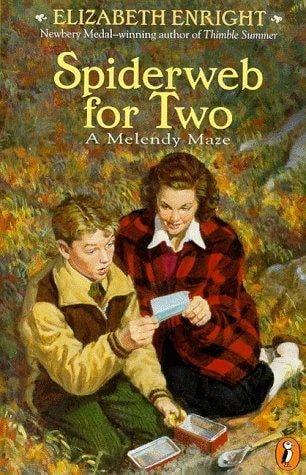
"Spiderweb for Two: A Melendy Maze" is a charming and poignant conclusion to Elizabeth Enright's Melendy family series, though it stands perfectly well on its own. The story centers on the two youngest Melendy children, Randy and Oliver, who are left behind at their country home when their older siblings depart for boarding school and New York City. Initially, the children grapple with profound loneliness and boredom, a feeling many young readers can relate to when friends or family members are away.
The narrative skillfully introduces a captivating mystery: a series of rhyming clues that lead Randy and Oliver on a winter-long treasure hunt. This game becomes a beautiful metaphor for coping with change and finding joy in unexpected places. The clues encourage exploration of their home, the surrounding countryside, and even their family's history, subtly weaving in elements of discovery and learning. Enright handles the children's initial sadness with sensitivity, allowing them to feel their emotions before gently guiding them towards engagement and excitement. The emotional arc moves from quiet melancholy to active curiosity and ultimately, to heartwarming joy and a renewed sense of belonging.
This book is ideal for children aged 6-10 who might be experiencing a similar sense of loss or change, such as older siblings going away to college, a close friend moving, or even just the quiet of a long winter break. Parents might reach for this book when their child is struggling with separation anxiety or boredom, or simply to introduce them to a classic, gentle mystery. It's a wonderful read-aloud for younger children, who will enjoy the puzzle-solving aspect and the cozy atmosphere, while independent readers will appreciate the engaging plot and relatable characters.
What sets "Spiderweb for Two" apart is its gentle pacing and its focus on internal resilience and the power of family connection, rather than external conflict. The "treasure" at the end is not material wealth, but the priceless reunion and affirmation of love, making it a deeply comforting read. Parents should be aware that the initial chapters do dwell on Randy and Oliver's loneliness, which can be a good starting point for discussing these feelings with a child. The 1940s setting, with children wandering freely, offers a nostalgic glimpse into a different era, which can also spark conversations about independence and community.