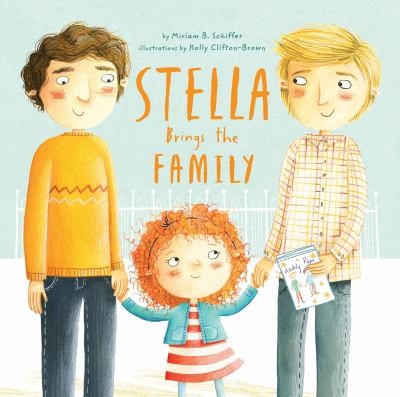
A parent might reach for this book when their child feels their family is different, especially around holidays like Mother's or Father's Day. It gently addresses the anxiety a child might feel when their family doesn't look like the ones they see at school. The story follows Stella, who has two loving fathers and no mother to invite to a class celebration. Instead of feeling left out, she finds a beautiful and inclusive solution. This sweet and affirming book for ages 4 to 8 reinforces the idea that love, not structure, is what makes a family. It's an excellent choice for any family, providing positive representation for children with same-sex parents and teaching empathy and acceptance to all children. It opens the door for conversations about diversity in a warm, child-friendly way.
The book directly addresses the topic of family identity, specifically a family with two fathers. The approach is secular and focuses on the child's internal emotional experience of feeling different. There is no external conflict or bullying. The resolution is entirely hopeful and celebratory, with Stella's community showing complete acceptance and inclusion.
Your experience helps other parents find the right book.
Sign in to write a reviewThis book is ideal for a 4 to 7 year old child in any family with a non-traditional structure, especially one with same-sex parents. It's perfect for a child who is beginning to notice their family is different from their peers' and may be feeling anxious about school events that highlight these differences. It is also an excellent book for any child to foster empathy.
No specific preparation is needed. The book can be read cold as the story is straightforward, gentle, and positive. A parent might want to be prepared to answer questions about their own family and other types of families their child knows after reading. A parent hears their child say, "Who will I bring to the Mother's Day brunch?" or "Why don't I have a mom like everyone else?" It is also a proactive tool for parents in LGBTQ+ families who want to prepare their child for these common school situations.
A younger child (4-5) will enjoy the simple problem-and-solution story, the colorful illustrations, and the idea of a big, fun family party. An older child (6-8) will better understand the social-emotional nuances of feeling different, the importance of inclusion, and the bravery in Stella's solution. They can connect it more deeply to the concept that families are defined by love.
Unlike many books that simply present diverse families, this one directly tackles the very specific and common anxiety-inducing event of a Mother's or Father's Day celebration at school. Its unique and empowering solution isn't to find a substitute mother figure, but to celebrate the entire support system, beautifully redefining the concept of family for the whole class.
Stella, a young girl with two fathers named Papa and Daddy, feels anxious when her teacher announces a Mother's Day celebration. Unsure who to invite, she worries she will be the only one without a mother. After talking it over, she comes up with a creative solution: to bring her entire loving family. Her Papa, Daddy, Nonna, aunt, uncle, and cousin all attend the party, which is a huge success. The story ends with her teacher and classmates warmly accepting and celebrating Stella's wonderful, big family.
This overview was generated by AI based on the book's content and reviews, and may not capture every nuance.