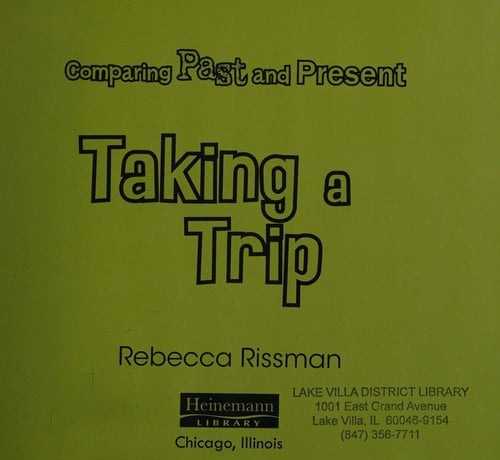
About This Book
"Taking a Trip: Comparing Past and Present" is an informative chapter book designed for children aged 4-11. It delves into the history of travel and transportation, illustrating how different modes of movement have evolved over centuries. The book uses a clear, comparative approach, showing what travel was like in the past versus how it is today. It's an excellent resource for sparking curiosity about history, technology, and social change, making complex concepts accessible for young readers. Parents will appreciate its educational value and its ability to prompt discussions about progress and innovation.
Wonderlit Review
Rebecca Rissman's "Taking a Trip: Comparing Past and Present" offers a clear and engaging look at the evolution of transportation. This nonfiction chapter book, aimed at early to late elementary readers, systematically explores various modes of travel, from walking and animal-powered journeys to modern cars, trains, planes, and boats. The book's strength lies in its comparative approach, presenting historical methods alongside contemporary ones, which helps young readers grasp the concept of social change and technological progress.
The book handles the topic in a straightforward, informative manner, without delving into sensitive or complex historical contexts beyond the scope of transportation itself. The emotional arc is one of discovery and appreciation for human ingenuity, starting with basic needs and moving towards increasingly sophisticated solutions. It fosters a sense of wonder about how much the world has changed and how far we've come.
This book is specifically for children who are developing an interest in history, how things work, or the world around them. It's an excellent resource for a child who asks, "How did people get around before cars?" or for supplementing a classroom unit on history, inventions, or social studies. Parents can use this book to open conversations about innovation, the impact of technology, and even the challenges of past eras. For younger readers (ages 4-6), it works well as a read-aloud, allowing adults to explain concepts and vocabulary. Older children (ages 7-11) will likely enjoy reading it independently, absorbing the facts and making their own comparisons. What sets this book apart is its focused, accessible comparison format, making the vast topic of historical transportation digestible and highly engaging for its target audience.
If Your Family Enjoyed This

Reviews
No reviews yet. Be the first to share how this book landed with your family.