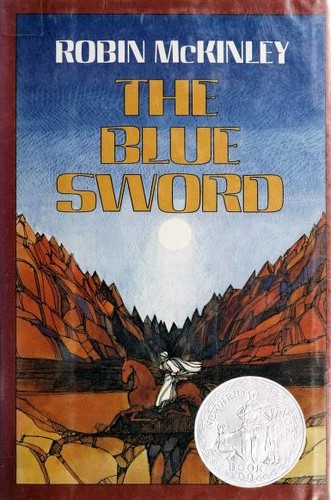
For the teen who feels out of place and yearns for a purpose beyond their ordinary life, this book offers a tale of discovering hidden strengths and finding where you truly belong.
A parent might reach for this book when their teen feels adrift, like an outsider who doesn't quite fit in their own world. It is a story for the quiet dreamer who yearns for purpose. The book follows Angharad "Harry" Crewe, an orphan sent to live in a remote colonial outpost. Feeling bored and lonely, her life is upended when she is kidnapped by the king of the native Hillfolk, who believes she has a magical destiny to save his people. This classic fantasy is less about flashy magic and more about Harry’s internal journey of discovering her own strength, competence, and sense of belonging. Perfect for ages 12 and up, it’s an empowering tale of finding your true home and identity in the most unexpected of places.
The story's colonial setting may require some context or discussion for a modern young reader.
Sensitive Topics
The core of the story involves cultural conflict and colonialism. The dynamic between the technologically advanced, occupying "Homelanders" and the more tradition-bound, magical Hillfolk is central. The approach is metaphorical, exploring themes of prejudice, cultural identity, and assimilation. The resolution is hopeful, with the protagonist serving as a bridge between the two cultures. Violence is present in battle scenes, but it is not graphic. The idea of being kidnapped, even for a prophesied purpose, is a key plot point.
Ideal Reader
A thoughtful reader aged 12-15 who loves immersive fantasy but is ready for a more character-driven story. This is perfect for a teen who feels like an outsider, daydreams of a life with more purpose, or is grappling with where they fit in. It will especially resonate with horse lovers and readers who appreciate stories about mastering a skill through hard work.
Parent Prep
The book can be read cold, but a parent might want to be prepared to discuss the theme of colonialism. The dynamic between the Homelanders and the Hillfolk provides an opportunity to talk about cultural respect, prejudice, and the complexities of history, even in a fantasy setting. The kidnapping that sets the plot in motion is not depicted as a terrifying event, but rather a fateful one. A parent notices their teen seems withdrawn, bored, or disconnected. The teen might say things like, "I don't belong here," "No one gets me," or "My life is so boring." They may be searching for a story that validates the feeling of being different while offering a hopeful path toward finding one's purpose.
Age Experience
A 12 or 13-year-old will likely be captivated by the adventure: the magic sword, the training with horses and swords, and the excitement of the battles. An older teen (14-16) will connect more deeply with the nuanced themes of identity, the slow-burn romance, and Harry's complex internal struggle to reconcile the two cultures she becomes a part of.
What Makes It Special
Unlike many plot-heavy modern YA fantasies, *The Blue Sword* is a classic character study. Its pacing is deliberate, focusing on the realistic and gradual process of Harry's transformation. The world-building is rich and immersive, and the prose is elegant and evocative. It's a story that values inner strength and competence over chosen-one tropes, making Harry's heroism feel genuinely earned.
Read plot summary
Orphaned Angharad "Harry" Crewe is sent to live at a remote colonial military outpost in the desert land of Damar. Feeling isolated and bored, she is drawn to the mysterious native Hillfolk. The Hill king, Corlath, recognizes that Harry possesses a latent magical ability called "kelar." He kidnaps her, believing she is the only one who can wield the legendary blue sword, Gonturan, to defend his people against a coming invasion from the North. Harry undergoes rigorous training, embracing the Hillfolk culture and discovering a strength she never knew she had. She becomes a respected warrior and leader, ultimately finding her true identity and home.
This overview was generated by AI based on the book's content and reviews, and may not capture every nuance.
Discussion Prompts
1
Why do you think Corlath chose to kidnap Harry instead of trying to persuade her to come with him? Was his decision justified?
2
Harry often feels like an outsider, first with the Homelanders and then with the Hillfolk. How do her actions show her trying to find a place to belong in each culture?
3
Think about the scene where Harry first picks up Gonturan. How does this moment change how she sees herself and how others, like Corlath, see her?
4
At the end of the book, Harry is a hero to the Hillfolk and a stranger to the Homelanders. Do you think it's possible for her to truly belong to both worlds? Why or why not?
5
Compare Harry's relationship with her horse, Tsornin, to her relationships with people. What role does Tsornin play in her journey to becoming a warrior?