PLOT SUMMARY:
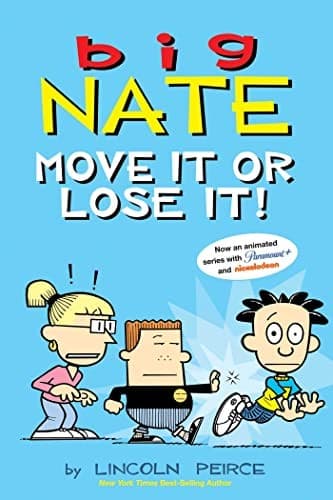
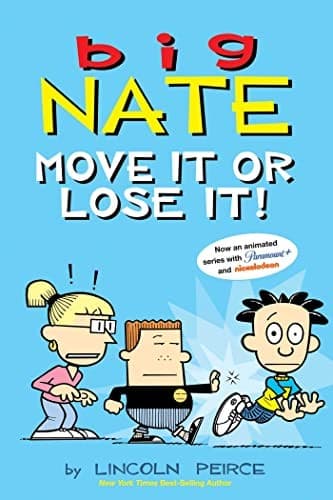
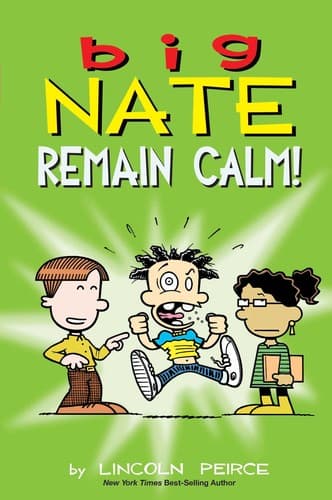
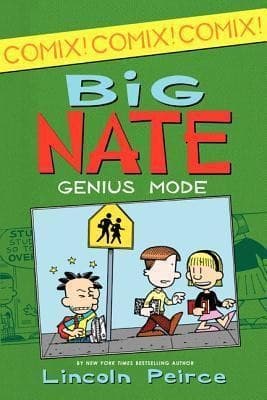
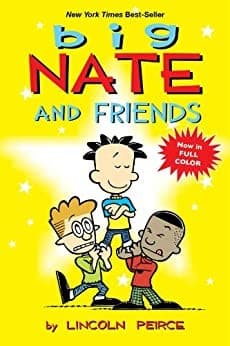
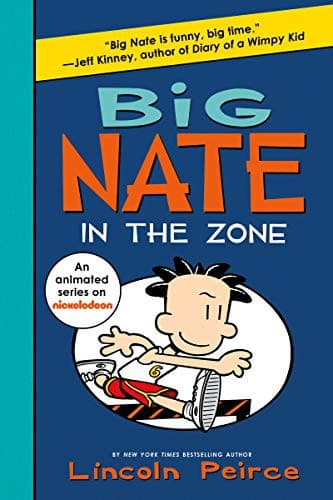
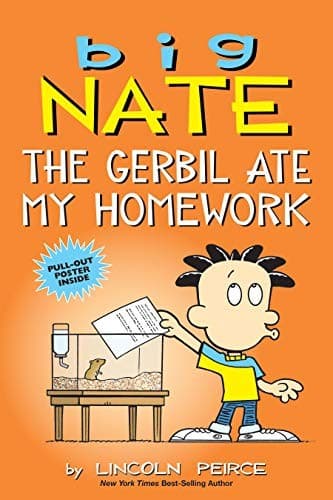
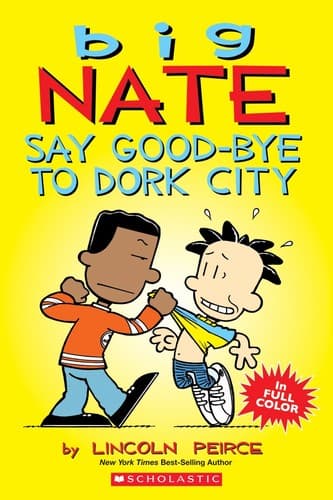
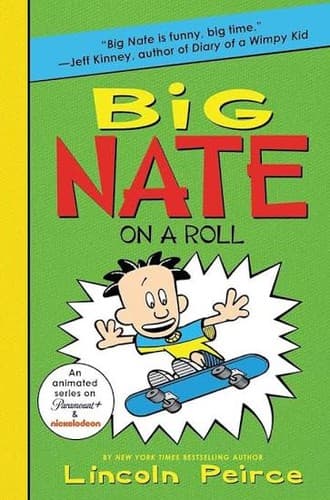
Nate Wright is a confident, self-proclaimed genius navigating the treacherous waters of P.S. 38. The story follows his daily adventures: clashing with his teacher Mrs. Godfrey, competing with the perfect Gina Hemphill-Toms, pulling pranks with his best friends Francis and Teddy, and dealing with his family. The narrative is a series of interconnected, humorous vignettes about school life, detention, crushes, and Nate's artistic ambitions, told through a mix of text and comic strips.
SENSITIVE TOPICS:
The book's approach to sensitive topics is minimal and always comedic. It touches on themes of 'being different' and social awkwardness, but frames them through Nate's unwavering (if sometimes misplaced) self-confidence. The approach is entirely secular. Family conflicts, like sibling rivalry, are present but minor and resolved with humor. Resolutions to problems are consistently hopeful and funny, not deeply introspective.
EMOTIONAL ARC:
The emotional arc is consistently light and energetic. It's a series of small peaks and valleys, with each chapter or vignette presenting a minor conflict (like getting detention) that is resolved with a punchline. There is no overarching heavy emotional journey; it's designed for consistent entertainment and laughter. The tone is gentle and comedic throughout.
IDEAL READER:
A reluctant reader aged 8-11, particularly a child who loves comics and slapstick humor. This is for the child who enjoys 'Diary of a Wimpy Kid' or 'Captain Underpants' and is ready for a new series. Also perfect for a creative kid who loves to draw, as Nate's own cartooning is a central part of the story.
PARENT TRIGGER:
A parent might seek this out after their child says, "School is boring," "My teacher hates me," or expresses frustration about feeling misunderstood by adults or peers. It's a great choice when a child needs to see that school-day struggles can also be a source of humor and connection.
PARENT PREP:
No prep needed. The book can be read cold. The humor is straightforward, and the situations are standard school fare (detention, tests, crushes). Parents may want to be aware that Nate is not a perfect role model; he's a bit of a troublemaker, but his heart is in the right place. This can be a good conversation starter about intentions versus actions.
AGE EXPERIENCE:
A younger reader (8-9) will focus on the slapstick humor, the funny drawings, and the clear-cut conflicts (Nate vs. Mrs. Godfrey). An older reader (10-13) will pick up more on the social dynamics, the satire of school life, the clever wordplay, and relate more to the feelings of wanting to be recognized for one's talents.
DIFFERENTIATOR:
While often compared to 'Diary of a Wimpy Kid', Big Nate's key differentiator is the protagonist's unshakeable self-confidence. Greg Heffley is anxious and often a victim of circumstance, whereas Nate Wright is bold, outspoken, and believes in his own greatness even when he fails. This makes for a more energetic and optimistic read. The integrated comic-strip format also gives it a distinct feel.