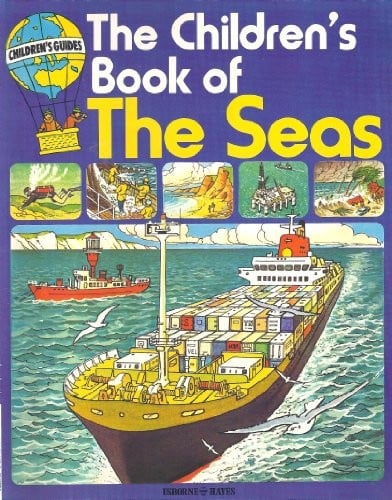
About This Book
Introduces basic oceanographic concepts and such ocean-related topics as lighthouses, pearls, islands, and diving.
Wonderlit Review
The Children's Book of the Seas, published by Usborne, is a foundational non-fiction title designed to introduce young readers to the vast and intriguing world of the ocean. It covers basic oceanographic concepts, along with specific, engaging topics such as lighthouses, pearls, islands, and diving. While the publication date of 1976 suggests some scientific information might be dated, the core concepts and the sense of wonder it aims to inspire remain timeless. The book handles its topics in a straightforward, accessible manner, likely using clear language and illustrations (though not explicitly stated, typical for Usborne and the genre). The emotional arc is one of gentle discovery and growing curiosity, aiming to foster an appreciation for marine environments.
This book is specifically for children aged 4-11 who are beginning to show an interest in the natural world, particularly the ocean. A parent might reach for this when their child asks 'what is the ocean?' or expresses fascination with sea creatures, or perhaps in preparation for a beach vacation. Parents should preview the book to ensure the scientific information aligns with current understanding, though for basic concepts like 'what is an island,' it should hold up well. Younger children (4-7) will enjoy it as a read-aloud, focusing on the engaging illustrations and simpler facts, while older children (8-11) can read it independently and delve deeper into the concepts. What makes this book different is its classic Usborne approach, often characterized by clear, labeled illustrations and bite-sized information, making it a reliable choice for early non-fiction exploration.
If Your Family Enjoyed This
Reviews
No reviews yet. Be the first to share how this book landed with your family.