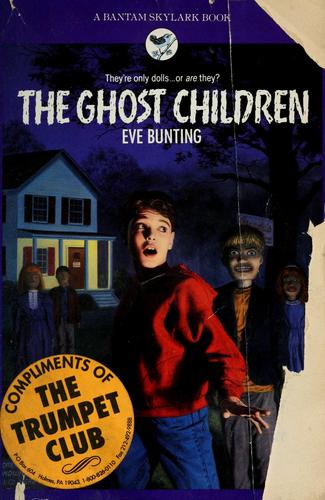
A parent might reach for this book when their child is feeling lonely after a move or is struggling to adjust to a new family dynamic, like a new sibling or step-parent. The Ghost Children tells the story of Matt, who moves to an old farmhouse and discovers the ghosts of four children who died there long ago. As he uncovers their sad history, he begins to process his own feelings of being an outsider in his new family. This poignant story gently explores themes of loneliness, grief, and empathy, making it appropriate for ages 9-12. It’s a powerful choice for showing a child how connecting with the past can help us understand our own place in the present.
Your experience helps other parents find the right book.
Sign in to write a reviewThe discovery of children's skeletons in a hidden room may be unsettling for some readers.

The book deals directly with the death of children, who exist as ghosts. The approach is historical and empathetic, not graphic or scary. Their backstory involves starvation and abandonment. The resolution is bittersweet and hopeful: the ghosts find peace, and Matt accepts his new sibling, but their historical tragedy remains. The perspective on ghosts is secular.
A sensitive, introspective 9 to 12-year-old grappling with feelings of loneliness due to a move or shifting family structure (a new step-parent, a new baby). It is perfect for a child who loves historical mysteries and gentle, character-driven ghost stories rather than overt horror.
Parents should be prepared to discuss the historical context of famine and immigration that led to the children's deaths. The scene where Matt discovers the small skeletons of the children in a hidden room (Chapter 14) could be upsetting for more sensitive readers and may be worth previewing or discussing beforehand. A parent might notice their child withdrawing, expressing feelings of not belonging, or showing resentment towards a changing family. The child might say, "I feel like I don't fit here anymore," or "Things were better before the new baby was coming."
A younger reader (9-10) will likely focus on the ghost story and the mystery of helping the spirits. An older reader (11-12) will better grasp the deeper parallels between the ghost children's feelings of abandonment and Matt's feelings of being replaced by his new sibling, appreciating the story's emotional complexity and historical weight.
Unlike many middle-grade ghost stories that prioritize scares, this book uses the paranormal as a powerful metaphor for unresolved emotional needs. Its unique strength is linking a protagonist's present-day loneliness to a specific historical tragedy, fostering a deep sense of empathy and perspective that is rare in the genre.
Twelve-year-old Matt moves to a rural farmhouse with his dad, pregnant stepmother, and younger sister. Feeling isolated and resentful of the coming baby, he discovers the spirits of four children in the attic. These ghosts are waiting for their parents, who abandoned them during a historical tragedy (implied to be the Irish Famine). Matt and a new friend research the house's past to bring the children peace, and in the process, Matt learns to accept his own changing family.
This overview was generated by AI based on the book's content and reviews, and may not capture every nuance.