About This Book
Simpleton's generosity helps him gain a princess for his bride.
Wonderlit Review
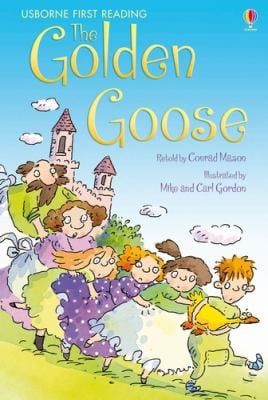
The Golden Goose, a classic fairy tale by the Brothers Grimm, is presented here in a chapter book format, making it accessible for early independent readers or as a delightful read-aloud. The story centers on Simpleton, a character whose name belies his true nature; he is genuinely kind and generous, sharing his food with a hungry old man. This act of compassion leads him to discover a magical golden goose, which has the power to make anyone who touches it become stuck. This peculiar enchantment creates a humorous procession of characters, from the innkeeper's daughters to the parson and his clerk, all comically attached to each other and the goose. Simpleton's journey with his unusual entourage eventually reaches a kingdom where a sad princess has been promised to anyone who can make her laugh. The sight of the golden goose and its attached followers finally breaks her melancholy, leading to Simpleton's unexpected marriage to the princess.
The book handles themes of kindness, generosity, and the idea that good deeds are rewarded, often in unexpected ways. It's a secular retelling, focusing on the moral lesson rather than any specific religious context. The emotional arc is gentle and uplifting; Simpleton starts as an underdog but through his inherent goodness, achieves a triumphant and joyful ending. This book is ideal for children aged 4-8 for read-alouds, and 7-11 for independent reading, particularly those who enjoy traditional fairy tales, stories about kindness, or characters who overcome initial disadvantages. A parent might reach for this book when their child is exploring classic folklore, or when they want to reinforce the value of empathy and generosity. There are no scenes requiring significant preview, as the tone is lighthearted and the 'stuck' element is portrayed comically rather than frighteningly. Younger children will enjoy the repetitive nature of people getting stuck to the goose and the visual humor, while older children can appreciate Simpleton's journey and the underlying message about inner worth. What sets this apart from some other retellings is its clear, accessible language and chapter book format, making it a good bridge for children transitioning from picture books to longer narratives.
If Your Family Enjoyed This

Reviews
No reviews yet. Be the first to share how this book landed with your family.