About This Book
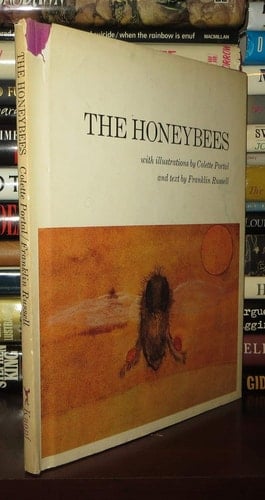
A presentation of the twelve month cycle of life in a honeybee colony.
Wonderlit Review
Franklin Russell's "The Honeybees" provides a detailed yet accessible exploration of a honeybee colony's life over a full twelve-month cycle. The narrative follows the bees through the changing seasons, describing their foraging activities, hive maintenance, the queen's role, and the emergence of new generations. The book handles its subject matter with a straightforward, informative tone, presenting the natural world without any sensitive topics or metaphorical interpretations. The emotional arc is one of gentle wonder and continuous discovery, fostering a sense of appreciation for the natural world's intricate processes.
This book is specifically for children with a burgeoning interest in nature, insects, or how animal communities function. It's an excellent choice for budding naturalists who are curious about the mechanics of the animal kingdom. A parent might reach for this book when their child asks questions like "How do bees make honey?" or "What do bees do all day?", or after a nature walk where bees were observed. No specific parent preparation is needed, though having a magnifying glass or a nature journal could enhance the reading experience. Younger children (ages 4-6) will likely enjoy the general narrative and illustrations, focusing on the observable actions of the bees. Older children (ages 7-11) can delve deeper into the biological details and understand the interconnectedness of the colony's life with the seasonal changes. What sets this book apart is Russell's ability to imbue scientific information with a lyrical quality, making it more engaging than a typical textbook and providing a comprehensive, year-long perspective on bee life.
If Your Family Enjoyed This

Reviews
No reviews yet. Be the first to share how this book landed with your family.