About This Book
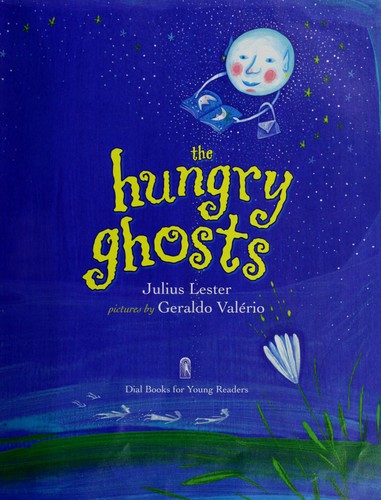
A resourceful young boy tries to help three hungry ghosts find something to eat.
Scary Scenes
Wonderlit Review
Julius Lester's 'The Hungry Ghosts' offers a delightful and gentle take on a potentially spooky subject. The story centers on a resourceful young boy who, instead of fearing the three hungry ghosts he encounters, feels compassion for their plight. The narrative follows his earnest attempts to find something that these ethereal beings can actually eat, leading to a series of creative and often humorous solutions. The book handles the concept of ghosts in a very approachable, non-threatening way, making them more pitiable than scary. This is not a book about overcoming fear of ghosts, but rather about extending kindness and problem-solving for those in need, regardless of their spectral nature. The emotional arc is one of gentle curiosity and burgeoning empathy, moving towards a satisfying resolution where the boy successfully aids his new, unusual friends. This book is particularly well-suited for children aged 4-8 who are starting to enjoy chapter books or for a read-aloud with younger listeners. It's a perfect choice for a child who is curious about the supernatural but sensitive to scary content, or for a parent looking to introduce themes of compassion and helping others in an imaginative context. Parents might want to preview the initial encounter with the ghosts to reassure very young or anxious children, though the tone quickly establishes their friendly nature. Older children (9-11) might find it a quick, charming read, appreciating the boy's ingenuity. What sets this book apart from other 'ghost stories' for children is its unwavering focus on empathy and practical problem-solving, rather than fright or mystery, making the ghosts characters to be helped, not feared.
If Your Family Enjoyed This
Reviews
No reviews yet. Be the first to share how this book landed with your family.