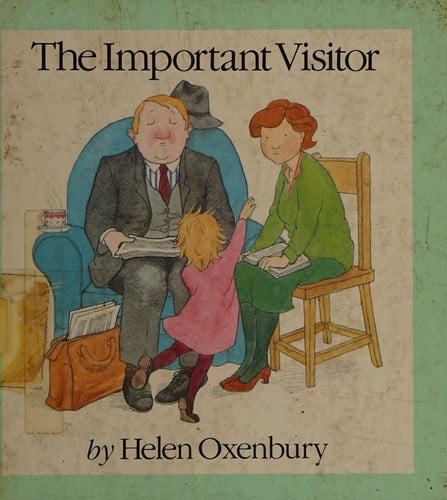
About This Book
A little girl has a hard time being as good as her mother wants her to be when her mother's boss come to visit.
anxiety_worry
Wonderlit Review
Helen Oxenbury's "The Important Visitor" charmingly depicts a common childhood scenario: the pressure to be on one's best behavior for guests. A little girl's mother emphasizes the need for good conduct as her boss is coming over. The story follows the girl's earnest attempts to comply, which are frequently, and relatably, derailed by her natural, lively spirit. Her efforts to be "good" lead to minor, innocent mishaps and an internal struggle to maintain composure, culminating in a moment of gentle understanding.
The book handles the sensitive topic of social expectations and a child's frustration with grace and subtle humor. It doesn't preach about manners but rather observes the inherent difficulty children face in suppressing their natural energy and impulses for extended periods. The emotional arc is gentle throughout, starting with the mild tension of anticipated expectations, moving through the child's internal and external struggles, and likely resolving with warmth and acceptance of the child's authentic self.
This book is specifically for children who are learning about social expectations, those who feel pressure to "perform" for adults, or children who are naturally boisterous and sometimes struggle with conforming to rules. It's also a valuable resource for parents navigating these moments with their children. A parent might reach for this book when preparing for guests, discussing manners, or after a challenging social interaction where a child felt they couldn't meet expectations. There are no major scenes requiring preview; instead, parents can use it as a starting point for conversations about how challenging it can be to always be "good."
Younger children (ages 4-6) will easily relate to the girl's actions and the immediate, often humorous, consequences of her struggles. Older children (ages 7-8) might appreciate the nuance of the mother's perspective and the girl's internal conflict, understanding the social dynamics more deeply. What sets this book apart is Oxenbury's distinct, expressive illustrations, which infuse the common theme with unique charm and empathy. It focuses less on explicit rule-following and more on the *feeling* of trying to be good, offering a more emotionally resonant perspective than many didactic manners books.
If Your Family Enjoyed This

Reviews
No reviews yet. Be the first to share how this book landed with your family.