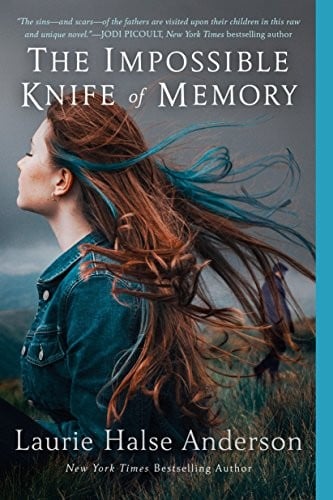
Laurie Halse Anderson's "The Impossible Knife of Memory" is a deeply affecting young adult novel that tackles the complex and often devastating reality of living with a parent suffering from PTSD. The story follows Hayley Kincaid, a high school student trying to carve out a normal life after moving back to her father's hometown. Her father, a veteran, struggles profoundly with the psychological scars of war, leading to unpredictable and often frightening episodes that force Hayley to become his primary caregiver and protector. The book unflinchingly portrays the emotional toll this takes on Hayley, from her isolation and anxiety to her fierce love and loyalty.
This book handles sensitive topics with raw honesty and empathy. It does not shy away from the darker aspects of mental illness, including self-medication and the challenges of seeking professional help, but it also highlights moments of hope, connection, and resilience. The emotional arc is intense, starting with a heavy sense of burden and fear, but gradually moving towards a more hopeful, albeit realistic, understanding of healing and support. The narrative is secular, focusing on the human experience of trauma and recovery.
This book is specifically for mature young adult readers, typically ages 14 and up, who may be grappling with similar family challenges, or those seeking to understand the experiences of veterans and their families. The publisher's listed age range of 4-11 is highly inaccurate for a 416-page novel with such mature themes. A parent would reach for this book when their teenager is experiencing a family member's mental health struggles, particularly PTSD, or when they want to foster empathy and understanding about such issues. Parents should be prepared for discussions around mental illness, substance use, and the emotional burden on caregivers. Younger teens (12-13) might find the themes too intense without significant parental guidance, while older teens (14+) will likely appreciate the depth and authenticity of Hayley's journey. What sets this book apart is Anderson's masterful ability to weave a compelling narrative with profound psychological insight, offering a voice to the often-unseen struggles of children of veterans and those living with mental illness.