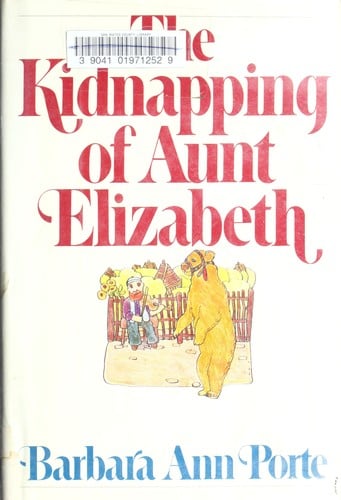
About This Book
A parent might reach for this book when their child starts asking questions about family history, wondering what their relatives were like long ago. The story follows Ashley, who, for a school project, interviews family members to create a 'family portrait'. Instead of a drawing, she collects a treasure trove of funny, overlapping, and sometimes contradictory stories about her family's past, centered on the legendary 'kidnapping' of her great-aunt. This gentle book explores themes of family love, memory, and how our identities are shaped by the stories we inherit and tell. It’s a wonderful way to encourage curiosity about a child's own roots and model the joy of listening.
Ashley finds a unique family portrait evolving as she talks to family members and collects their stories for a class assignment.
Moral Ambiguity
Wonderlit Review
PLOT SUMMARY:
For a school assignment to create a family portrait, a young girl named Ashley decides to collect stories from her relatives instead of drawing a picture. She uncovers a web of interconnected, often contradictory, and humorous tales about her family's past, primarily centered on the legendary 'kidnapping' of her great-aunt Elizabeth by her great-uncle. Through these conversations, Ashley pieces together a unique and evolving understanding of her family's identity and the nature of storytelling itself.
SENSITIVE TOPICS:
The central event, the 'kidnapping', is revealed to be a romantic elopement, not a violent crime. The approach is humorous and gentle, treating the event as a piece of charming family lore. The story touches on past hardships like the Great Depression, but frames them through stories of resilience and community. The resolution is hopeful and affirming, celebrating the richness of shared history and the subjective nature of memory.
EMOTIONAL ARC:
The emotional arc is consistently gentle, warm, and comforting. It begins with a simple, relatable school assignment and builds through a series of charming, funny, and heartwarming anecdotes shared by quirky family members. There is no significant dramatic tension or emotional low point. The book maintains a cozy, inquisitive tone throughout, culminating in a satisfying sense of discovery and family connection.
IDEAL READER:
An inquisitive 8 to 11 year old who is just beginning to show curiosity about their own family history. It is perfect for a child who loves listening to stories from grandparents, has discovered old family photos, or enjoys slice-of-life stories more than high-stakes adventures.
PARENT TRIGGER:
A parent might look for this book after their child asks a question like, "What were you like when you were my age?" or "Tell me a story about our family from long ago." It directly addresses a child's budding curiosity about their own roots and personal history.
PARENT PREP:
No specific preparation is needed; the book can be read cold. The themes are positive and easy to understand. A parent might want to be ready for their child to start asking for their own family stories, as the book is a powerful catalyst for intergenerational conversation.
AGE EXPERIENCE:
A younger reader (8-9) will likely focus on the humor, the quirky characters, and the surface-level mystery of the 'kidnapping'. An older reader (10-12) will better appreciate the more subtle themes about memory, subjectivity, and how a family's identity is constructed from a collage of different perspectives and embellished tales.
DIFFERENTIATOR:
Unlike many books about family history that follow a single linear narrative, this book's unique power lies in its structure. It is a collection of anecdotal, sometimes conflicting, first-person accounts. This beautifully illustrates that a 'family portrait' is not a static image but a living, breathing collage of stories that change with each telling. It celebrates the process of gathering stories as much as the stories themselves.
If Your Family Enjoyed This

Reviews
No reviews yet. Be the first to share how this book landed with your family.