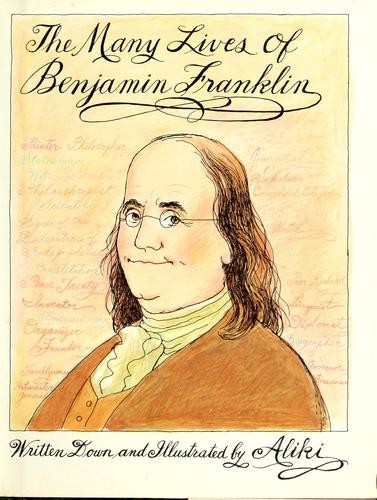
A parent might reach for this book when their child is fascinated by how things work or asks big questions about history. This engaging biography by Mary Pope Osborne introduces young readers to Benjamin Franklin, not just as a founding father, but as a curious boy, a determined apprentice, a brilliant inventor, and a wise statesman. The book celebrates themes of lifelong learning, perseverance, and the power of a curious mind. It's an excellent choice for children aged 8 to 12, as it presents complex historical events in an accessible way. It's perfect for inspiring a child to see that they do not have to be just one thing; they can be a scientist, an artist, and a leader all at once.
Your experience helps other parents find the right book.
Sign in to write a reviewThe American Revolution is described, but without graphic battle details.
The book directly addresses that Franklin owned enslaved people early in his life and later became an abolitionist. This evolution is presented factually as part of his personal growth. The death of his brother and a son are mentioned directly but gently as sad life events. The American Revolution is discussed in terms of political conflict, not graphic warfare. The overall approach is secular and historical.
The ideal reader is a 9- to 11-year-old who enjoys nonfiction and is curious about history, science, or how one person can make a difference. It is also perfect for a child who has multiple interests (art, science, writing) and is encouraged to see a historical figure who embraced being a polymath. It's an excellent next step for a child who has outgrown the Magic Tree House series but still loves Mary Pope Osborne's storytelling.
A parent should be prepared to discuss the historical context of slavery. While the book addresses Franklin's changing views, a conversation can help a child understand the complexity of the issue. Pages covering this topic (around the time he moves to Philadelphia and later in his life) would be good to preview to facilitate a thoughtful discussion. A parent has a child who is doing a school report on a historical figure and wants a book that is more engaging than an encyclopedia entry. Or, a child asks a question like, "Who invented electricity?" or "Can I be an inventor and a writer at the same time?"
A younger reader (8-9) will likely focus on the exciting biographical details: running away from home, the famous kite experiment, and his clever inventions. They will see Franklin primarily as a brilliant inventor. An older reader (10-12) will better grasp the political nuances of his diplomatic work, his project for moral perfection, and the significance of his evolving stance on slavery. They will take away a more complex portrait of a multifaceted leader.
Unlike more textbook-like biographies, Mary Pope Osborne's narrative skill makes Franklin's life read like an adventure story. Her focus on the "many lives" or roles he played effectively frames his genius not as a single talent, but as a result of boundless curiosity and a commitment to lifelong learning. This approach makes him exceptionally relatable and his accomplishments feel achievable through hard work and curiosity.
This biography chronicles the life of Benjamin Franklin, starting with his curious boyhood in Boston and his apprenticeship under his brother. It follows his journey to Philadelphia, his success as a printer and publisher of Poor Richard's Almanack, his groundbreaking scientific experiments with electricity, and his numerous practical inventions. The latter half of the book details his indispensable role as a diplomat and statesman during the American Revolution and the drafting of the Constitution, showcasing his wit, wisdom, and dedication to the new nation.
This overview was generated by AI based on the book's content and reviews, and may not capture every nuance.