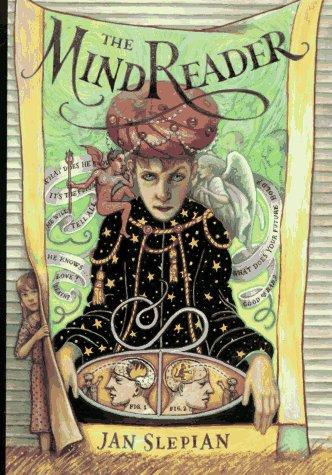
The story follows ten-year-old Annie in 1930s San Francisco, whose family performs in a traveling vaudeville show. Her best friend, Connie, also part of the vaudeville circuit, has a secret: he can read minds. He finds this ability a burden and decides to run away to escape it. Annie, demonstrating immense loyalty and courage, helps him in his endeavor. The book handles the concept of telepathy as a source of distress rather than a superpower, which is a unique take. The act of running away is presented as a desperate measure by a child overwhelmed by his unique ability, rather than a rebellious act. The peril is mild, focusing more on the emotional journey and the bond between friends. The story likely starts with Connie's internal conflict and fear, moving through the tension of their escape, and hopefully resolves with a sense of acceptance or understanding for Connie, and a strengthened bond for Annie. It's likely a poignant yet ultimately hopeful arc. This book is ideal for children aged 8-11 who enjoy historical fiction with a touch of the fantastical, and who appreciate stories centered on deep friendships. It's particularly resonant for children who might feel different or burdened by unique traits, or those who are navigating complex friendships. A parent might pick this up if their child is struggling with feeling "other" or unique, if they are exploring themes of loyalty and friendship, or if they are interested in historical settings like the 1930s vaudeville era. It's also a good choice for a child who enjoys a gentle adventure story. Parents should be prepared to discuss the implications of running away, emphasizing that it's a fictional plot device to explore deeper themes, and not a recommended solution to problems. They can also discuss the emotional weight of having an unwanted ability and the importance of supporting friends. Younger readers (4-7, if read aloud) might focus on the adventure and the strong friendship. Older readers (8-11) will likely grasp the deeper emotional conflict of Connie's telepathy and the moral complexities of helping a friend run away, as well as the historical context. Unlike many stories where special abilities are celebrated, this book explores the burden of such a gift, making it a nuanced take on the "superpower" trope. The historical vaudeville setting also provides a rich, less common backdrop for a children's story.