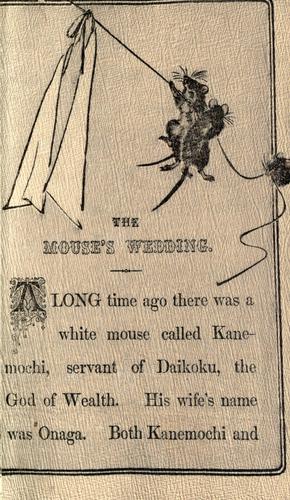
A parent might reach for this book when their child is feeling small or comparing their own abilities to others. This classic folktale gently explores the idea that true strength is about finding the right fit, not just being the biggest or most powerful. In the story, two proud mouse parents search for the most powerful husband for their daughter, asking the Sun, the Cloud, the Wind, and the Mountain. Each points to another who is stronger, leading to a surprising and heartwarming conclusion. It’s a wonderful story for young readers (5-8) that reinforces themes of self-worth, community, and understanding that your own kind can be the strongest and best match for you.
The premise is based on a parent-arranged marriage, a concept that may be unfamiliar to some children. The book handles this metaphorically. It's less about a specific cultural practice and more a fairytale device to explore the theme of finding a suitable partner. The resolution is happy and affirming, with the daughter mouse delighted by the choice. The focus is on finding a good match, not on a lack of agency.
Ideal Reader
This book is perfect for a 5 to 7-year-old who is beginning to understand social comparisons. It’s for the child who sometimes feels small or overlooked and needs a story that validates their own inherent strengths. It also appeals to children who love traditional folktales, animal stories, and predictable, cyclical narratives.
Parent Prep
The book can be read cold. No specific preparation is needed. However, a parent might be prepared to briefly discuss the idea of strength. For example, asking "What does it mean to be strong?" before or after reading can enrich the experience. The arranged marriage aspect is presented so simply that it's unlikely to raise complex questions, but parents can frame it as "finding the best partner." A parent hears their child say, "I wish I was big like them," or, "I can't do that because I'm too little." The child might be feeling overshadowed by older siblings or peers and needs a gentle story about how their own unique qualities are a source of strength.
Age Experience
A younger child (5-6) will latch onto the repetitive quest, the personified natural elements (Sun, Cloud), and the happy animal wedding. The takeaway is a simple, satisfying story. An older child (7-8) will be more capable of grasping the central theme: strength is relative, and value comes from within one's own community. They can appreciate the clever twist at the end on a more intellectual level.
What Makes It Special
Unlike many fairytales that champion marrying a powerful outsider (like a prince), this story beautifully subverts that trope. Its uniqueness lies in its gentle, circular logic that concludes by celebrating one's own community and identity. The definition of "most powerful" is cleverly redefined from brute force to compatibility, making its message of self-acceptance particularly effective and memorable.
Read plot summary
Two mouse parents want the very best husband for their daughter, so they set out to find the most powerful being in the world. They first approach the Sun, who is blocked by the Cloud. They ask the Cloud, who is pushed by the Wind. They ask the Wind, who is stopped by the Mountain. Finally, they ask the Mountain, who admits that the one thing stronger than it is a mouse, who can burrow right through it. The mouse parents realize the best and strongest match for their daughter is another mouse, and she is happily married.
This overview was generated by AI based on the book's content and reviews, and may not capture every nuance.
Discussion Prompts
1
At the start of the story, what did the mouse parents think made someone a 'strong' husband? How did their idea of strength change by the end?
2
Each character they met, like the Sun and the Cloud, thought someone else was stronger than them. Why do you think nobody saw their own strength?
3
Why was the mountain mouse the perfect, 'strongest' partner for the daughter mouse, even though he couldn't block the sun or stop the wind?
4
If you were writing this story, what other powerful things in nature might the mouse parents have talked to on their search?
5
The daughter mouse was very happy with the final choice. What do you think makes two people a good match for each other?