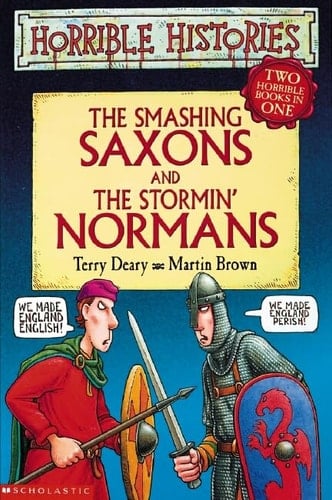
This book, part of the immensely popular "Horrible Histories" series, offers a dual dive into early medieval British history: "The Smashing Saxons" and "The Stormin' Normans." Terry Deary's signature style presents historical facts, figures, and events with a generous helping of humor, gross-out details, and an irreverent tone that makes history accessible and exciting. The first section explores the Anglo-Saxon period, detailing their culture, daily life, and conflicts. The second focuses on the Norman Conquest, particularly the pivotal year 1066, William the Conqueror, and the Battle of Hastings, explaining the lead-up and aftermath. The book handles sensitive topics like warfare, conquest, and societal change by framing them within a humorous, often exaggerated context. While battles and violence are discussed, they are presented factually but without graphic detail, focusing more on the "horrible" aspects of daily life and historical events rather than the gore. The emotional arc is consistently engaging and lighthearted, designed to entertain while educating, rather than to evoke deep emotional responses to historical tragedy. This book is specifically for children aged 4-11 who might find traditional history textbooks dry or intimidating. It's perfect for a child who loves gross facts, silly jokes, and learning in an unconventional way. A parent might reach for this book when their child is studying medieval history in school, expresses a general curiosity about the past, or when they're looking for an engaging non-fiction option for a reluctant reader. Parents should be prepared for the book's signature humor, which includes some mild gross-out elements and a playful approach to historical violence. It's an excellent conversation starter about how we interpret history and the different ways stories can be told. Younger children (4-7) will enjoy it as a read-aloud, picking up on the funny bits and broad strokes of history, while older children (8-11) can read it independently, appreciating the detailed facts and the satirical tone. What makes it different from other history books is its unique blend of accurate historical information with an entertaining, often cheeky, narrative style that demystifies and enlivens the past.