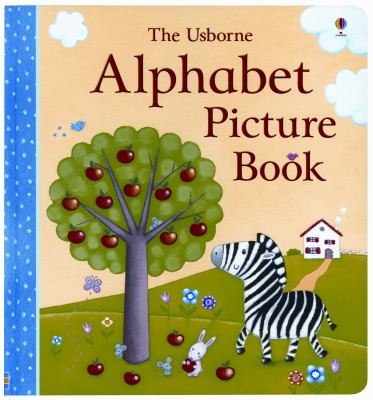
A parent might reach for this book when their young child is beginning to show curiosity about letters and words, or as a gentle tool to prepare for starting preschool or kindergarten. This classic alphabet book provides a clear, vibrant, and joyful introduction to the letters A through Z. Each page features a letter alongside a collection of charmingly illustrated, labeled objects that begin with that letter. It fosters a sense of wonder and accomplishment as children learn to connect sounds, symbols, and pictures. Its simple, engaging format is perfect for the shortest attention spans, making it an ideal first alphabet book.
None. This is a secular educational book focused entirely on letter and object recognition. The content is neutral and universally appropriate.
A 2-year-old who is building their vocabulary and enjoys pointing at and naming pictures. Also, a 3 to 4-year-old who is actively learning letter recognition and sounds in preparation for school. It is excellent for children who enjoy interactive, seek-and-find style reading experiences.
Your experience helps other parents find the right book.
Sign in to write a reviewNo preparation is needed. This book can be read cold. A parent can enhance the experience by asking their child to point to specific objects or by making the letter sounds, but the book stands perfectly well on its own. A parent has noticed their toddler pointing to letters on signs or asking "What's that?" about text. Or, a preschool teacher has suggested working on letter-sound correspondence at home. The parent is looking for a foundational, screen-free educational tool.
A 1 to 2-year-old will experience this as a vocabulary-building picture book, focusing on naming the objects (e.g., "dog," "apple"). A 3 to 5-year-old will engage with the core concept, connecting the letter 'D' to the picture of the dog and the sound it makes. The older child uses it for literacy skills, while the younger child uses it for language acquisition.
Unlike many alphabet books that feature only one object per letter, this book's strength lies in its density. Each letter is accompanied by a variety of illustrations, turning each page into a mini 'I Spy' game. This format significantly expands vocabulary and reinforces the letter's sound through multiple examples, making the learning more robust.
This is a concept book, not a narrative. Each page or two-page spread is dedicated to a single letter of the alphabet, presented in both uppercase and lowercase. The pages are filled with multiple, clearly labeled illustrations of animals, objects, and concepts that begin with that letter. For example, the 'B' page might feature a ball, a bee, a boat, and a banana. The book progresses sequentially from A to Z.
This overview was generated by AI based on the book's content and reviews, and may not capture every nuance.