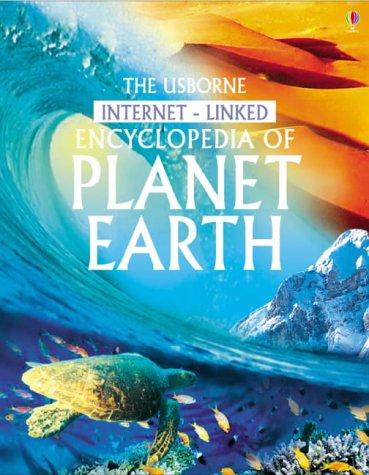
About This Book
A book that contains descriptions of websites you can visit to take you further into the subject in an entertaining and informative way, however you do not have to have a computer to use this book. This encyclopedia works on its own as an outstanding reference book without using the Internet at all.
Wonderlit Review
This 2003 Usborne encyclopedia offers a robust introduction to Earth sciences for a wide elementary age range (4-11). It covers fundamental concepts in geology, meteorology, oceanography, and environmental science with clear, concise language and plentiful illustrations, making complex topics digestible for young readers. While its "internet-linked" feature, a highlight at its publication, is now largely outdated and would require parental guidance to find current, relevant online resources, the book stands strong as a comprehensive reference on its own. The book's emotional arc is one of discovery and wonder, aiming to ignite a passion for understanding our planet. It handles scientific topics directly and factually, without delving into metaphorical or religious interpretations. This book is ideal for a child with a burgeoning interest in how the world works, or for a parent seeking a reliable, engaging resource for school projects or general knowledge. A parent might reach for this when their child asks "Why is the sky blue?" or "How do mountains form?" or when a science fair project is on the horizon. Younger children (4-7) will enjoy browsing the pictures and having sections read aloud, sparking initial questions. Older children (8-11) can independently read and absorb the information, using it for research or simply satisfying their curiosity. Parents should be prepared to help navigate the internet links, perhaps using them as a springboard to discuss how information evolves online. Its strength lies in its foundational content and visual appeal, offering a solid starting point for Earth science exploration that remains relevant despite its age.
If Your Family Enjoyed This
Reviews
No reviews yet. Be the first to share how this book landed with your family.