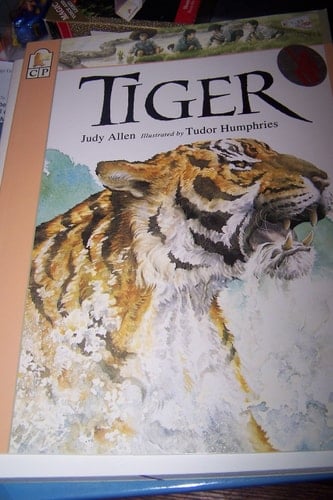
About This Book
When the villagers hire a famous hunter to kill the tiger rumored to live in the woods, only one young boy wishes to protect the animal; and, in fact, the hunter knows more than one way to shoot a tiger.
peril_danger
animal_harm
Wonderlit Review
Judy Allen's 'Tiger' presents a thoughtful narrative about human-animal coexistence and the courage of a young boy. The story centers on a village's decision to hire a hunter to eliminate a tiger rumored to live nearby, driven by fear. In contrast, a compassionate young boy takes it upon himself to protect the animal. The book handles the sensitive topic of hunting by introducing a hunter who 'knows more than one way to shoot a tiger,' suggesting a nuanced approach beyond simple violence, which can open discussions about ethical solutions to human-wildlife conflict. The emotional arc moves from initial fear and conflict to the boy's determined bravery, aiming for a hopeful or thoughtful resolution. This book is ideal for children who are developing a sense of justice and empathy for animals, or those interested in conservation. Parents might reach for this when a child expresses concern for animals in danger, or when discussing the impact of humans on wildlife. For younger readers (4-6), it works well as a read-aloud, focusing on the boy's courage and the tiger's plight. Older children (7-11) can engage with the deeper ethical dilemmas, the motivations of the villagers, and the broader themes of conservation. What sets this book apart is its focus on a single child's moral stand against an entire community, and the potential for a non-traditional resolution to the hunting conflict, encouraging critical thinking about complex issues.
If Your Family Enjoyed This

Reviews
No reviews yet. Be the first to share how this book landed with your family.