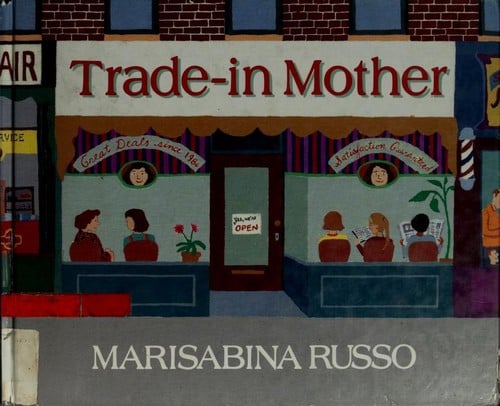
Marisabina Russo's 'Trade-in-mother' is a charming and relatable picture book that tackles the common, albeit often unspoken, childhood fantasy of wishing for a 'different' parent. The story follows young Max as he candidly discusses with his mother the various reasons he might want to trade her in, from her nagging about chores to her less-than-perfect cooking. This playful premise allows children to safely explore their own frustrations and fleeting annoyances with their parents in a non-judgmental way. The book handles these 'negative' feelings with gentle humor, never making Max seem truly mean-spirited, but rather innocently expressing a child's perspective.
The emotional arc begins with lighthearted complaints and moves towards a heartwarming resolution. Max's mother listens patiently, creating a safe space for his honesty. The turning point comes when Max reveals the one, profound reason he wouldn't trade her: 'Because you're my mother.' This simple statement encapsulates the unconditional love and unique bond that transcends everyday irritations. The book is specifically for children aged 4-8 who might be experiencing moments of frustration with their parents, perhaps due to sibling rivalry, feeling misunderstood, or just navigating the boundaries of family life. A parent might reach for this book when their child is expressing 'I hate you' sentiments, or when they want to open a dialogue about big feelings in a lighthearted way.
Parents should preview the initial pages where Max lists his complaints, as it can be a good opportunity to discuss that it's okay to feel frustrated, but also to understand the deeper love that exists. Younger children (4-5) will enjoy the humor and the comforting resolution, while older children (6-8) might appreciate the nuance of expressing feelings and the importance of family bonds. What makes this book different is its direct, yet gentle, approach to a potentially sensitive topic, framing it within a loving, open conversation rather than a dramatic conflict. It normalizes the idea that even when we're annoyed, the core love remains.