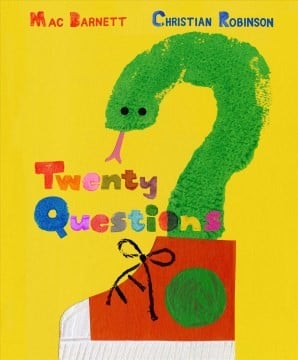
About This Book
Not all questions have answers. Some have more than one answer. And others have endless answers, unfolding out to the edges of the world. In this spare yet expansive narrative, acclaimed author Mac Barnett poses twenty questions both playful and profound. Some make us giggle. Others challenge our assumptions. The result is a quirky, wandering exploration of where the best questions lead to stories.
Wonderlit Review
Mac Barnett's "Twenty Questions" is a delightful and thought-provoking picture book that presents a series of questions, ranging from the whimsical to the deeply philosophical. The book's core message is that not all questions have single, definitive answers, and that the act of questioning itself can lead to expansive thought and imaginative storytelling. It handles the concept of inquiry and open-ended thinking with a gentle, accessible, and non-prescriptive approach, inviting readers to engage without pressure.
The emotional arc of the book is consistently curious, playful, and uplifting. It begins with an invitation to ponder and concludes with a sense of boundless possibility and the joy inherent in discovery. This book is ideal for children who possess a natural curiosity, frequently ask "why" and "what if," or for those who could benefit from understanding that ambiguity can be a source of creativity. It's also an excellent resource for parents and educators seeking to foster critical thinking and imaginative play.
A parent might choose this book when they want to spark a thoughtful discussion with their child, encourage creative storytelling, or simply enjoy a quiet, reflective read-aloud that ignites wonder. It's a perfect choice for bedtime or a calm afternoon. No specific preparation is needed, but parents should be ready to engage in open-ended dialogue and embrace a child's diverse responses to the questions, as there are no scary or sensitive scenes.
Younger children (ages 4-6) will likely enjoy the playful nature of some questions and the freedom to offer their own imaginative answers. Older children (ages 7-8) may delve deeper into the philosophical aspects, appreciating the challenge to their assumptions and the concept of multiple perspectives. What sets "Twenty Questions" apart from many concept books is its focus on the *process* of questioning and the *value* of ambiguity, rather than delivering specific information, making it a unique tool for nurturing intellectual curiosity.
If Your Family Enjoyed This
Reviews
No reviews yet. Be the first to share how this book landed with your family.