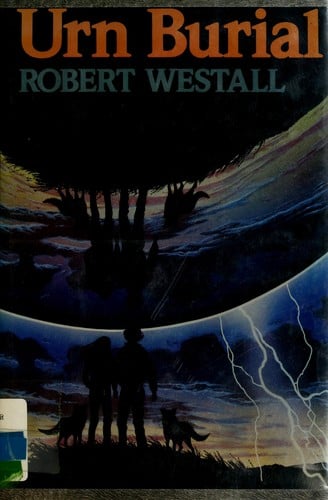
About This Book
In a small village, Ralph, a young shepherd, discovers a weird pile of stones. By digging into the stones, he discovers a strange "sleeping" creature with ointments and a dangerous weapon buried alongside. Before he knows it, he has awakened a dangerous and terrifying secret.
Scary Scenes
peril_danger
Wonderlit Review
Robert Westall's "Urn Burial" delivers a concise yet impactful science fiction adventure for young readers. The story centers on Ralph, a young shepherd in a quiet village, whose innocent curiosity leads him to uncover a strange pile of stones. His digging reveals an ancient burial site containing a dormant, otherworldly creature, accompanied by mysterious ointments and a dangerous weapon. This discovery inadvertently awakens a terrifying secret, propelling Ralph into a chilling supernatural encounter.
The book handles its sensitive topics, primarily fear and peril, directly through the narrative's suspenseful plot. The creature and the awakened secret are presented as genuinely dangerous, creating a sense of urgency and threat. The emotional arc begins with wonder and curiosity, quickly shifting to suspense and fear as Ralph grapples with the consequences of his discovery, ultimately requiring bravery to confront the unknown.
This book is specifically for children who enjoy a blend of science fiction, mystery, and a touch of horror. It's ideal for readers who are drawn to stories about uncovering hidden secrets, encountering extraterrestrial life, and facing down unexpected dangers. A parent might reach for this book when their child is looking for a quick, engaging chapter book that offers a thrilling, slightly scary experience, especially if they've enjoyed other creature-feature or mystery stories.
Parents should be mindful of the publisher's broad age range of 4-11. While the language is accessible, the "chilling" and "terrifying" elements make it more suitable for the older end of this spectrum, typically 8-11 years old. Younger, more sensitive readers might find the concept of a dangerous, awakened alien creature too intense. For older children, it provides a compelling, fast-paced read that encourages discussions about curiosity, responsibility, and courage. What sets it apart is its effective blend of a pastoral, real-world setting with a sudden, ancient alien intrusion, offering a unique contrast that makes the threat feel more immediate and personal than a sprawling invasion narrative.
If Your Family Enjoyed This
Reviews
No reviews yet. Be the first to share how this book landed with your family.