About This Book
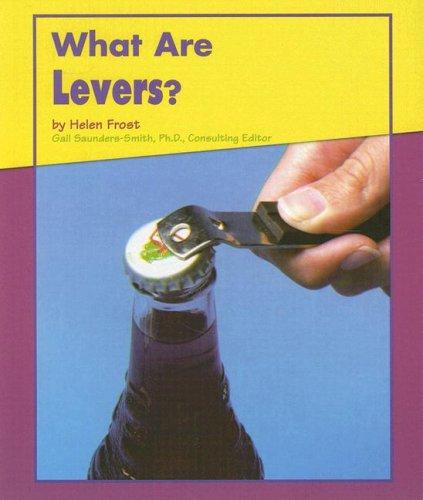
A parent would reach for this book when their curious child starts asking “how does that work?” about everything from playground equipment to kitchen gadgets. “What Are Levers?” is a straightforward nonfiction early reader that clearly explains one of the six simple machines. Using simple text and clear photographs of real-world examples like seesaws, wheelbarrows, and bottle openers, it introduces core physics concepts in a way young children can easily grasp. It’s an excellent choice for nurturing a child's natural curiosity about the world, building foundational STEM vocabulary, and encouraging them to see the science hidden in everyday objects. This book makes an abstract concept feel tangible and exciting for budding engineers.
What Parents Should Know
Sensitive Topics
None. This is a secular, informational science book.
Ideal Reader
A 5 to 7-year-old who is beginning to read independently and shows a strong interest in mechanics, construction, or how things work. This is for the child who loves building toys, watches construction sites with fascination, or is always trying to figure out how a tool functions.
Parent Prep
No prep is needed to read the book cold. However, the experience can be greatly enhanced if the parent is prepared to demonstrate the concept afterwards. Simply having a ruler (lever), a pencil (fulcrum), and a small eraser (load) on hand can turn the reading experience into a memorable, hands-on experiment. A parent has just heard their child ask, "How does a crane lift that heavy block?" or "Why is it easier to dig with a long shovel?" The child is demonstrating an intuitive grasp of physics and is ready for the vocabulary to describe their observations.


Reviews
No reviews yet — be the first!
Your experience helps other parents find the right book.
Sign in to write a review