Wonderlit Review
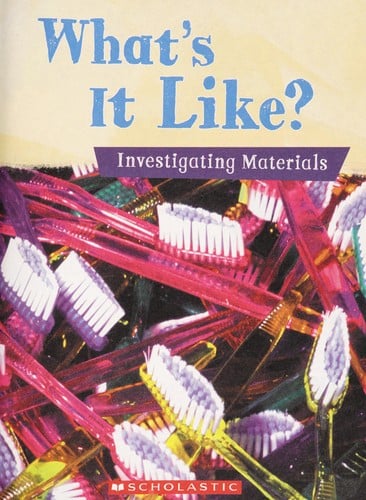
Janine Scott's 'What's it Like? Investigating Materials' is a solid entry into early non-fiction science, specifically tailored to introduce the concepts of materials science and properties to a broad elementary age range. The book takes a direct, observational approach, guiding young readers through the process of examining everyday objects and understanding their characteristics, such as texture, flexibility, and durability. It handles these scientific topics in a straightforward, secular manner, focusing on observable phenomena rather than complex theories.
The emotional arc is one of gentle discovery and empowerment, as children are encouraged to use their senses and critical thinking skills to understand their environment. It starts with simple questions and builds towards a more nuanced understanding of the physical world, leaving the reader with a sense of accomplishment and heightened curiosity. This book is specifically for children who are naturally curious about 'how things work' or 'what things are made of,' or for parents and educators looking for a structured way to introduce basic scientific inquiry.
A parent might reach for this book when their child is asking a lot of 'why' questions about objects, or when they want to supplement early science education at home. Parents should preview the book to consider how they might extend the learning with hands-on activities, as the book itself likely serves as a guide for observation rather than a full activity book. Younger children (4-6) will enjoy it as a read-aloud, focusing on the vocabulary and simple observations, while older children (7-11) can read it independently and use it as a framework for their own investigations. What sets this book apart is its clear focus on materials, providing a foundational understanding that can be built upon in more complex science studies, making it a valuable resource for early STEM engagement.
Discussion Prompts
1
What are some of your favorite materials and why?
2
Can you find three objects in our home that are soft? What about three that are hard?
If Your Family Enjoyed This
Reviews
No reviews yet. Be the first to share how this book landed with your family.