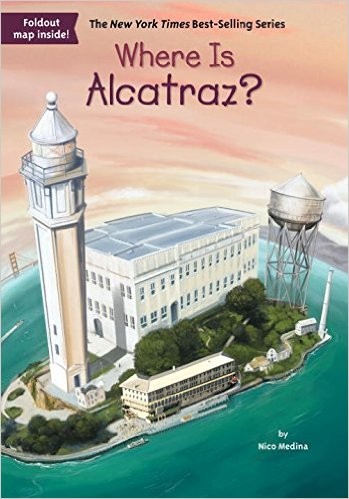
A parent should reach for this book when their curious child starts asking big questions about history, justice, and famous landmarks. "Where Is Alcatraz?" is a nonfiction book that explores the history of the infamous island, from its time as a military fort to its years as America's most notorious federal prison. It touches on themes of justice, confinement, and resilience by telling the stories of famous inmates and their daring escape attempts. Perfect for ages 8-12, this book's engaging, fact-filled format with helpful illustrations makes complex history accessible and exciting, making it an excellent choice for both avid and reluctant readers fascinated by real-life mysteries.
The book deals with crime, imprisonment, and violence (such as the "Battle of Alcatraz" riot). The approach is entirely factual and historical, avoiding graphic detail. It presents the realities of the prison system in a direct, secular manner. The resolution for the prison is its closure, and the Native American occupation section ends with their forced removal, which is a realistic, not necessarily hopeful, historical outcome.
Your experience helps other parents find the right book.
Sign in to write a reviewThis is for a 9 to 11-year-old history enthusiast who loves facts, real-life mysteries, and learning about iconic places. They are likely a fan of the "Who HQ" series format: short chapters, black-and-white illustrations, and informational sidebars. This reader is curious about how the world works, including its darker aspects like crime and punishment, but wants it presented in a safe, digestible way.
Parents should be ready for conversations about why people go to prison, the fairness of the justice system, and the ethics of punishment. While the book is not graphic, the descriptions of solitary confinement ("the hole") and the violence of the 1946 riot might be upsetting for more sensitive children. Reading it together could provide good opportunities for discussion, but it does not require extensive pre-reading or context. The parent hears their child say, "I saw a movie about a prison break, was that a real place?" or "What's the most famous prison ever?" It could also be triggered by a family trip to San Francisco or a school project on American landmarks.
A younger reader (8-9) will latch onto the exciting, tangible details: famous gangsters, clever escape plots, and the harsh rules. They will see it as a thrilling adventure story. An older reader (10-12) will be better able to appreciate the broader historical context, including the economic and political reasons for the prison's closure and the significance of the later Native American occupation as an act of political protest.
Compared to other children's history books, the "Where Is..." format excels at making a single, complex topic incredibly accessible and entertaining. It breaks down a multi-faceted history into engaging, bite-sized chapters. Its unique strength is balancing the sensational, high-interest aspects (mobsters, escapes) with solid, well-researched historical information, including important social history like the Native American occupation, which is often omitted from simpler accounts.
This book chronicles the complete history of Alcatraz Island. It begins with its early use by Native Americans and its development into a U.S. military fortress and then a military prison. The main focus is its tenure as a high-security federal penitentiary from 1934 to 1963, detailing the harsh conditions, the daily routines of prisoners, and profiles of infamous inmates like Al Capone and Machine Gun Kelly. The book highlights several famous escape attempts, most notably the 1962 incident involving Frank Morris and the Anglin brothers. It concludes with the prison's closure and the significant 19-month occupation by Native American activists from 1969 to 1971.
This overview was generated by AI based on the book's content and reviews, and may not capture every nuance.