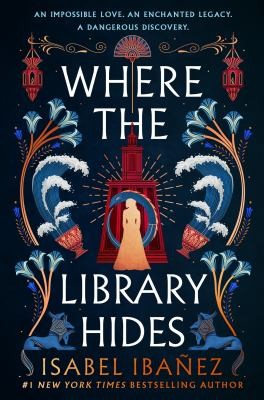
Reach for this book when your teenager is grappling with questions of legacy, belonging, or the desire to bridge the gap between their cultural heritage and their current reality. This lush historical fantasy, the sequel to What the River Knows, follows Inez Olivera as she navigates 19th-century Egypt, searching for her missing parents and unearthing the secrets of a hidden, magical library. It is a sophisticated exploration of grief, the weight of family secrets, and the courage required to forge one's own identity. While it contains high-stakes adventure and romantic tension, it remains grounded in deep emotional truths about trust and justice. It is an ideal choice for older teens who enjoy immersive world-building and stories that challenge colonial narratives while offering a thrilling, atmospheric mystery.
Your experience helps other parents find the right book.
Sign in to write a reviewOccasional physical altercations and injuries sustained during adventures.
Exploration of grief, parental loss, and betrayal by family members.
Thematic focus on colonial attitudes and the treatment of Egyptian history.
The book deals with parental abandonment and death with a realistic, heavy emotional weight. The approach to colonialism and the theft of antiquities is direct and critical. While there are magical elements, the resolution of grief is grounded and bittersweet.
A high schooler who feels caught between two worlds (cultural or familial) and who loves the 'academic' aesthetic of dusty libraries, historical secrets, and slow-burn romance.
Parents should be aware of the intense romantic tension and some depictions of violence/peril. Reading the first book, What the River Knows, is essential for context. A parent might choose this after hearing their child express frustration about not knowing their 'true' family history or feeling like adults are keeping secrets 'for their own good.'
Younger teens (14) will focus on the magic and the 'will-they-won't-they' romance. Older teens (17-18) will better appreciate the nuances of the post-colonial critique and the complex moral ambiguity of the adult characters.
Unlike many Egypt-centered fantasies, this is told through a Bolivian-Argentinian lens, offering a unique perspective on global identity and the ethics of archaeology.
Picking up immediately after the cliffhanger of the first book, Inez Olivera finds herself deeper in the mysteries of 1880s Egypt. She must navigate a web of betrayal involving her uncle, her parents' disappearance, and the enigmatic Whitford Hayes. The central quest involves locating a legendary hidden library that holds the key to her family's history and ancient magic, all while dealing with the political tensions of British-occupied Egypt.
This overview was generated by AI based on the book's content and reviews, and may not capture every nuance.