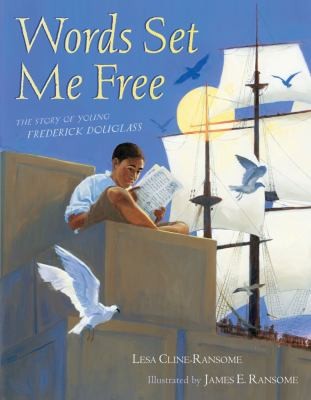
Reach for this book when your child is starting to view reading as a chore or when you want to introduce the idea that education is a hard-won human right. It is a powerful choice for parents looking to frame literacy not just as a school skill, but as an essential tool for freedom, agency, and self-determination. The story follows young Frederick Douglass from his childhood in slavery to his eventual escape, focusing specifically on his clandestine efforts to learn how to read and write. Through the lens of his resilience, children ages 6 to 10 will see how knowledge can be a shield and a bridge to a better life. While it handles the harsh realities of American history with honesty, it remains deeply grounded in the triumph of the human spirit. It is an ideal anchor for families discussing social justice, heritage, and the life-changing power of words.
Your experience helps other parents find the right book.
Sign in to write a reviewIncludes the separation of a child from his mother and the harsh living conditions of the enslaved.
The tension of Frederick being caught learning to read or trying to escape.
The book deals directly with the systemic cruelty of slavery, including forced labor, separation of families, and the denial of education. The approach is realistic and historical rather than metaphorical. While the content is heavy, the resolution is hopeful and triumphant, focusing on Douglass's agency.
A thoughtful 8-year-old who is beginning to ask questions about fairness and history, or a child who needs to see that persistence in learning can overcome even the most daunting obstacles.
Parents should be prepared to explain the concept of slavery in an age-appropriate way. It is best to read this alongside the child to answer historical questions about the American South. A child might ask, 'Why wouldn't they let him learn?' or 'Why was he taken from his mom?' This happens when a child recognizes the inherent injustice of the setting.
Younger children (6-7) will focus on the 'secret' nature of his learning and the bravery of his escape. Older children (9-10) will grasp the deeper connection between information, power, and systemic oppression.
Unlike many biographies that focus on the adult life of Frederick Douglass, this one focuses intensely on the 'how' of his literacy, making the act of reading feel like a thrilling, revolutionary act.
The narrative traces Frederick Douglass's early life, starting with his separation from his mother and his time on various plantations. The central conflict involves his realization that white people maintain power by keeping enslaved people illiterate. He surreptitiously teaches himself to read using bread to 'bribe' white children for lessons and copying letters from shipyards. The story concludes with his escape to the North, powered by the literacy he worked so hard to acquire.
This overview was generated by AI based on the book's content and reviews, and may not capture every nuance.