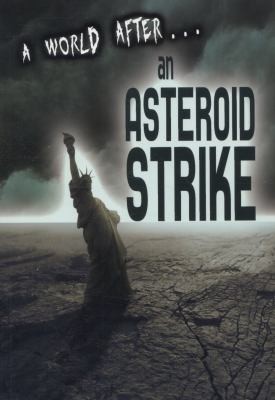
For the child who wonders 'what if' and loves to explore hypothetical future scenarios, this book delves into the science of an asteroid impact and its dramatic aftermath.
For the child whose imagination runs wild with 'what if' scenarios, this book provides a fascinating, science-based answer to the question: what would happen if a giant asteroid hit Earth? It walks readers through the immediate impact, the resulting 'impact winter', and the long-term challenges of survival and rebuilding civilization. While the topic is intense, the book handles it factually, focusing on problem-solving and human resilience. It's an excellent choice for channeling a child's big questions or anxieties about disasters into a productive, educational exploration of science and ingenuity.
The book's core subject is a mass extinction event and the end of civilization as we know it. Death is discussed on a massive, planetary scale but is handled in a detached, scientific manner, focusing on populations and species rather than individual stories. The approach is entirely secular. The final chapters offer a cautiously hopeful resolution, centered on human ingenuity and perseverance.
Ideal Reader
A scientifically-minded 9 to 12-year-old who is fascinated by space, dinosaurs, or survival scenarios. This book is perfect for a child who asks big 'what if' questions and prefers fact-based, logical explanations. It's less for a child seeking an emotional character journey and more for one who wants to understand the mechanics of a global catastrophe and its aftermath.
Parent Prep
A parent should preview the illustrations of the impact and its destructive consequences, as these might be frightening for more sensitive children. Be prepared to discuss the real (but very low) probability of such an event and to reassure the child of their safety. The book can be read cold, but a follow-up conversation is highly recommended to process the big ideas. The parent's child asks, "Could what happened to the dinosaurs happen to us?" or expresses anxiety after seeing a news report about an asteroid. The parent may also notice the child is consumed with disaster-themed play or shows a deep curiosity about survival skills.
Age Experience
A younger reader (8-9) will likely be captivated by the dramatic, action-oriented elements: the giant explosion, the survival challenges, and the connection to dinosaurs. An older reader (10-12) is more likely to grasp the complex, interconnected scientific concepts like climate change, ecological collapse, and the societal challenges of rebuilding from scratch.
What Makes It Special
Unlike fictional survival stories, this book is a work of speculative non-fiction. It grounds its dramatic premise in established scientific principles of physics, geology, and biology. Its strength is in explaining the complex, global systems that would be affected, making it an exercise in scientific thinking rather than just an adventure story.
Read plot summary
This non-fiction book explores the hypothetical, science-based scenario of a six-mile-wide asteroid striking Earth. It details the sequence of events: the initial impact, global firestorms, mega-tsunamis, and the subsequent 'impact winter' caused by dust blocking the sun. The book then examines the collapse of ecosystems and the food chain, before pivoting to how human survivors might endure the new reality, find food, form new communities, and eventually rebuild society over generations.
This overview was generated by AI based on the book's content and reviews, and may not capture every nuance.
Discussion Prompts
1
The book describes an 'impact winter.' What do you think would be the hardest part about living in a world that was dark and cold for years?
2
After the disaster, survivors have to form new communities. What three skills do you have that would be most useful in helping to rebuild society?
3
The book connects this event to what killed the dinosaurs. Do you think humans are better prepared to survive something like this? Why or why not?
4
If you were a survivor, what one thing from our current world (a tool, a book, a song) would you try to save for future generations? Why is it important?