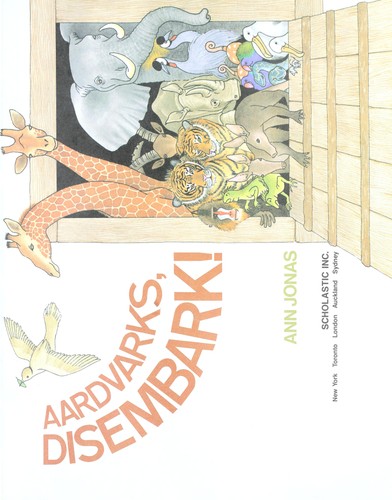
Reach for this book when your child is in a phase of deep curiosity about animals or when you want to expand their perspective on the diversity of the natural world. While framed within the familiar story of Noah's Ark, this book pivots quickly from the well known pairs to the strange and wonderful creatures we rarely see in picture books. It is a perfect choice for encouraging a sense of wonder and empathy for the planet's more vulnerable species. As the ark empties, children are introduced to animals like the okapi, the jerboa, and the zebrule. The book functions as both a vocabulary builder and a gentle introduction to the concept of endangered species. It is developmentally appropriate for preschool through early elementary children, offering a calm, awe-inspiring experience that values the small and the rare just as much as the big and the famous.
The book handles the concept of extinction and endangered status with a direct but calm approach. It is rooted in a religious narrative (Christian/Jewish tradition) but functions primarily as a secular natural history and conservation book. The resolution is hopeful in its beauty but serves as a realistic call to awareness.
Your experience helps other parents find the right book.
Sign in to write a reviewA child who has a literal 'encyclopedic' interest in nature: the one who can name every dinosaur and now wants to know every living creature. It is also excellent for a child who feels like an outsider and might find comfort in the beauty of 'strange' or lesser-known beings.
Parents should be prepared for the 'Index of Animals' at the back. It contains the most valuable information but may require some translating for younger listeners. A parent might choose this after their child asks, 'Why aren't there any more dodo birds?' or expresses a desire to see an animal that doesn't appear in their usual books.
For a 4-year-old, this is a beautiful picture book about funny-looking animals and the alphabet. For a 7- or 8-year-old, it becomes a scientific discovery tool and a first lesson in environmental stewardship.
Unlike other Noah's Ark books that focus on the storm or the 'famous' animals, this book uses the religious framework as a delivery system for a sophisticated lesson in biodiversity and conservation history.
The story begins where most Ark stories end: the flood is over and it is time to disembark. Noah calls out the animals, but instead of the standard zoo favorites, the book features an extensive, alphabetical procession of rare, unusual, and endangered animals. The book concludes with a comprehensive list of the animals mentioned, noting which are extinct or threatened.
This overview was generated by AI based on the book's content and reviews, and may not capture every nuance.