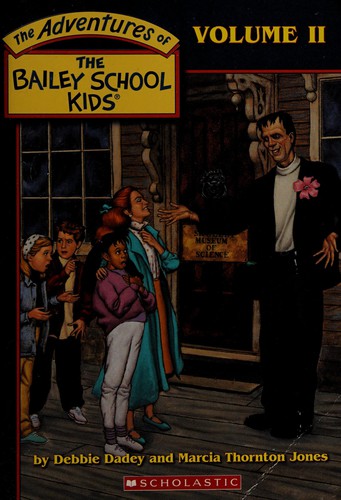
For a newly independent reader who is ready for chapter books but still needs plenty of fun, familiar settings, and lighthearted mystery to stay engaged. This collection follows four friends who suspect the adults in their lives are secretly monsters. Is their camp counselor a werewolf? Is the new art teacher a vampire? The stories blend everyday school and town life with silly, spooky speculation, touching on themes of friendship, teamwork, and using your imagination. The simple language and fast-paced, predictable plots are perfect for building reading stamina and confidence in the 6-to-9 age range, making it a fantastic bridge from picture books to longer novels.
Your experience helps other parents find the right book.
Sign in to write a reviewThe approach to 'monsters' and 'fear' is entirely metaphorical and played for humor. The potential supernatural threats are never confirmed and pose no real danger. The resolution is always ambiguous and lighthearted. The books are secular and avoid any complex life issues, focusing squarely on imaginative play and friendship dynamics.
A 7-year-old just beginning to read chapter books independently. This child enjoys silly humor and slightly spooky ideas (like Scooby-Doo) but is not ready for genuine scares (like Goosebumps). They are building reading stamina and benefit from short chapters, simple vocabulary, and a familiar cast of characters.
No preparation is needed. These stories can be read cold. The situations are simple, relatable, and require no special context. They are perfect for independent reading. A parent hears their child say, "Picture books are for babies, but big books are boring." The child is ready for more plot but is intimidated by dense text and complex stories. The parent is looking for a fun, high-interest series to bridge that gap and prove reading is entertaining.
A 6-year-old having this read aloud will delight in the silly scenarios and guessing games. An 8-year-old reading independently will appreciate the fast-paced humor, the friendship dynamics, and the satisfaction of quickly finishing a chapter book. Older readers in the range will recognize the formula and enjoy being 'in on the joke'.
Unlike other mystery series that present solvable puzzles (A to Z Mysteries) or genuine horror (Goosebumps), the Bailey School Kids series occupies a unique space of the 'maybe-mystery'. Its signature feature is the ambiguity. The central question is never answered, which encourages imagination and discussion over deductive reasoning.
This volume contains four stories from the popular series: Werewolves Don't Go to Summer Camp, Mrs. Jeepers Is Missing, Cupid Doesn't Flip Hamburgers, and Gremlins Don't Chew Bubble Gum. In each book, the core group of friends (Howie, Eddie, Liza, and Melody) encounter a new adult in their town of Bailey City who exhibits bizarre behavior. They gather clues and speculate that the adult is secretly a monster. The plots are formulaic: an odd adult appears, the kids investigate, and the story ends on an ambiguous, humorous note that lets the reader decide if the kids' wild theory was correct.
This overview was generated by AI based on the book's content and reviews, and may not capture every nuance.